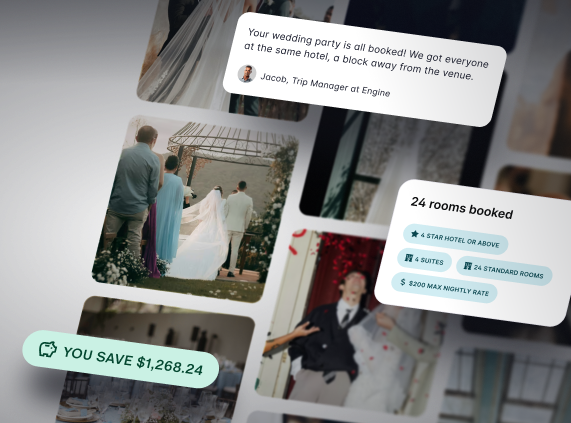
Can we negotiate wedding block perks without increasing the room count?

Yes, you often can negotiate wedding block perks without increasing the room count.
Hotels look at way more than just a headcount when they’re deciding on your wedding perks. Your date, your season, and even how easy your group is to host all play a starring role in the negotiation. By leaning into these details, you can often secure valuable extras like suite upgrades or better parking rates without the pressure of a massive room commitment.
The key is to ask for the right perks, at the right time, and with realistic expectations. If you are already overwhelmed by comparing hotels, rates, guest needs, and contract terms, this is exactly where Room Blocks by Engine can make the process feel much simpler by helping you compare proposals, rates, and perks in one place.

Why room block perks are sometimes negotiable
When couples hear the word “negotiation,” it can sound intimidating. In reality, many wedding hotel block perks are simply part of the normal proposal process.
Hotels like Marriott, Hilton, Hyatt, and IHG properties often offer concessions for wedding groups because group bookings save their team time and bring in business they may not have captured otherwise. According to Room Blocks by Engine’s wedding FAQs, hotel proposals commonly include room rates, fees, parking details, and available perks, all organized for easy comparison.
That means you do not always need to ask for more rooms to ask for better value.
Perks you may be able to negotiate without adding rooms
Some of the most common wedding room block perks include:
- A complimentary or discounted suite for the couple
- Discounted parking for guests
- A waived welcome bag or gift bag distribution fee
- Complimentary breakfast
- Extended group rates for extra nights
- A better cutoff date
- A small number of upgraded rooms for family or the wedding party
- Flexible attrition or reduced deposit terms on contracted blocks
Not every hotel will offer every perk, and some requests are easier to win than others. But many couples are surprised to learn that perks can be part of the conversation even with a modest block.
What gives you leverage besides room count
Room count matters, but it is not the only factor.
Timing
Most couples start the wedding room block process 9 to 12 months before the wedding, which is often the sweet spot for better availability and more accurate pricing. Starting within that window can also improve your negotiating position because the hotel still has flexibility.
If you wait until the last minute, hotels may still respond, but pricing and room types can be limited. That makes perks harder to secure.
Wedding date and demand
A hotel has more flexibility on a softer weekend than on a peak wedding weekend, holiday weekend, or major event date. If your wedding falls during slower travel periods, you may have a better chance of getting extras without increasing the room count.
Simplicity of the group
Hotels appreciate groups that seem organized and realistic. If your guest count is clear, your room estimate is reasonable, and your expectations match the market, they may be more willing to offer concessions.
Type of block
A contracted room block usually comes with stronger pricing and perk potential because the hotel has guaranteed business, but it also carries more responsibility if rooms are not filled. A courtesy block offers flexibility with less risk, though it may come with fewer guarantees.
That is why it is so important to choose the block type that fits your wedding, not just the one that sounds like it has the most extras.
How to ask for perks the smart way
The best negotiations are specific, polite, and practical.
Instead of saying, “Can you do better?” ask for one or two perks that matter most to your guests or wedding weekend logistics.
A better approach
Try requests like:
- “Is it possible to include discounted parking for guests?”
- “Can the hotel waive the welcome bag distribution fee?”
- “Would you consider a complimentary suite upgrade for the couple?”
- “Can the group rate be extended for guests arriving a day early or leaving a day late?”
- “Is there flexibility on the cutoff date if guests book later than expected?”
These are easier for a hotel to evaluate than a vague request for “more perks.”
Which perks are worth prioritizing
Not every perk has the same value. Couples sometimes focus on flashy extras and miss the terms that can save more stress and money.
Prioritize perks that improve the guest experience
Ask yourself which options will actually help your guests:
- Lower parking costs
- Better booking flexibility
- Extra nights at the group rate
- A convenient booking link
- A waived fee for welcome bags
These may matter more than a small room upgrade, especially if many guests are traveling in from out of town.
Watch for hidden fees
One of the biggest mistakes couples make is focusing only on the room rate. A lower nightly rate can look great until you notice parking fees, bag drop charges, resort fees where applicable, or strict attrition terms in the contract.
Before choosing a hotel, review:
- Taxes and fees
- Parking costs
- Cutoff date
- Deposit requirements
- Attrition terms
- Cancellation policy
- Charges for welcome bags or hospitality items
Room Blocks by Engine notes that proposals often include these details, which makes side by side comparisons much easier than chasing answers by email.
How to avoid overbooking just to get more perks
It can be tempting to reserve extra rooms because a hotel hints at better perks with a larger block. Be careful.
According to Room Blocks by Engine’s FAQs, one of the biggest room block mistakes is contracting too many rooms. If your contract includes attrition, you may be responsible for a percentage of unsold rooms.
A smarter strategy is to:
- Start with a realistic block
- Ask for a few targeted perks
- Add rooms later if pickup is strong and inventory remains available
Hotels often prefer adding rooms later rather than reducing a contract after it is signed.
Why comparing multiple hotels matters
Most couples request proposals from 3 to 5 hotels, which gives enough variety without making the process feel overwhelming.
That comparison matters because one hotel may offer the lowest rate, another may have better perks, and a third may have the most flexible policies. When you are already balancing RSVPs, transportation, and guest questions, trying to decode all of that on your own can quickly become stressful.
That is where Room Blocks by Engine helps take the pressure off. Instead of calling or emailing multiple hotels yourself, you can compare proposals, rates, and concessions in one place and get support understanding what is actually a good deal.
The easiest way to get better value without more stress
You do not need a huge room block to ask for meaningful perks. In many cases, the best approach is not increasing your room count. It is choosing the right hotel, starting early, asking for practical concessions, and carefully reviewing the full offer beyond the nightly rate.
A good wedding room block should make your guests feel taken care of and make your planning feel lighter, not riskier.
Secure better wedding room block value with more confidence
You can often negotiate wedding block perks without increasing the room count, but the real win is knowing which perks matter, which terms to watch, and which hotel truly fits your wedding weekend.
Ready to find your perfect room block without the stress? Start comparing hotels with Room Blocks by Engine today. Start by choosing the city where you are getting married, compare your best-fit hotel options, and make guest accommodations feel simple from the start.


.svg)
BOOKING GROUP TRAVEL WILL NEVER BE THE SAME.