Do hotels require deposits for wedding room blocks?

Yes, sometimes hotels require a deposit for a wedding room block, but not always.
In general, contracted room blocks often require a deposit, while courtesy blocks usually do not. The exact amount, timing, and refund terms depend on the hotel, your wedding date, the number of rooms, and the agreement you sign. That is why it is so important to understand the terms before committing, especially when you are already juggling venue decisions, guest lists, and wedding weekend logistics.
For couples planning guest accommodations, this step can feel more confusing than it should. Between comparing hotels, understanding contract language, and trying to avoid surprise fees, room blocks can quickly become one more stressful wedding task. The good news is that once you know what hotels typically ask for and what questions to ask, the process becomes much easier. And with Room Blocks by Engine, couples can compare hotel proposals in one place and get help understanding the fine print before signing.
What determines whether a hotel requires a deposit?
The biggest factor is the type of room block you book.
Contracted room blocks
A contracted block is a formal agreement with the hotel. It usually guarantees a set number of rooms and may come with stronger group rates, better perks, and more protection for your guests. Because the hotel is committing inventory to your wedding, it will often ask for a deposit and include terms around cancellation and minimum pickup.
This is more common at larger full service hotels and popular wedding guest brands such as Marriott, Hilton, Hyatt, Westin, Sheraton, and DoubleTree, especially during high demand weekends.
Courtesy room blocks
A courtesy block is typically more flexible. The hotel sets aside a smaller number of rooms until a cutoff date, and if the rooms are not booked, they are released back into general inventory. In many cases, there is no deposit and no financial commitment.
Because they are so flexible, they aren’t always on the table during high-demand seasons or busy wedding weekends. Hotels may limit the number of rooms or shorten the booking window.
What wedding couples should ask before signing
Before signing any hotel room block agreement, ask these questions clearly and get the answers in writing:
1. Is the deposit refundable?
Some deposits are fully refundable until a certain date. Others become partially refundable or nonrefundable after the contract is signed.
2. When is the deposit due?
A deposit due immediately is very different from one due closer to the wedding. Timing matters for cash flow during wedding planning.
3. Are there attrition requirements?
Attrition means you are responsible for filling a certain percentage of your block. If your contract says 80 percent attrition and too few guests book, you may owe for the shortfall.
4. What is the cancellation policy?
Some hotels allow cancellation by a deadline with little or no penalty. Others charge based on the number of rooms reserved or expected revenue.
5. Are there extra fees beyond the deposit?
Ask about:
- Parking fees
- Resort or destination fees
- Welcome bag handling fees
- Extra person fees
- Early arrival or late checkout charges
- Taxes and service charges
A low room rate can lose its appeal quickly if the extras add up.
How to avoid hidden costs and booking mistakes
At the heart of every hotel search is a couple who just wants to do right by their guests. But a few common mistakes can make the process more expensive than expected.
Book the right number of rooms
One of the biggest mistakes couples make is blocking too many rooms too early. Starting with a realistic number is safer, especially because many hotels will let you add rooms later if inventory is available.
Start early, but not too early
Timing is everything! Most couples begin the room block process 9 to 12 months before the wedding, which is usually the sweet spot for accurate pricing and availability. If you wait until the last few months, your options may be limited and rates may be higher.
Watch the cutoff date
The cutoff date is the deadline for guests to book within your block. After that, unused rooms are released, and your guests may lose access to the group rate. A great help? Feature this date clearly on your wedding website and send a quick reminder as the deadline approaches so your guests can book with confidence.
Compare more than just the room rate
The best room block is not always the cheapest one. Couples should also compare:
- Location near the venue
- Shuttle or transportation convenience
- Perks like breakfast or suite upgrades
- Flexibility on adding rooms
- Deposit and cancellation terms
How Room Blocks by Engine makes this easier
Let’s be real: trying to compare five different hotel proposals can feel like a full-time job! When every property uses its own 'secret language' for rates and perks, it’s so easy to miss a little detail here or a deadline there when you’re just trying to find the dreamiest stay for your favorite people.
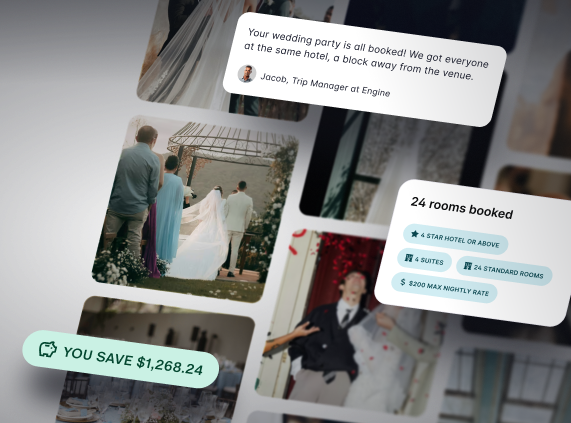
Room Blocks by Engine simplifies the process by helping couples search hotels near their venue, send requests directly to selected properties, and compare proposals side by side. Couples can review rates, perks, and savings in one place, then get support from a trip manager when it is time to finalize the reservation.
That support matters, especially when you are trying to understand whether a deposit is reasonable, whether the cancellation policy is fair, or whether a courtesy block might be the better fit for your wedding.
How to get the best rate without extra stress
A few practical tips can help:
Request proposals from 3 to 5 hotels
That usually gives you enough range in pricing and style without becoming overwhelming.
Give guests options
If your venue area allows it, consider a mix of hotel styles and price points. Some guests may want a full service hotel, while others prefer a more budget friendly stay.
Ask about perks
Hotels may offer concessions such as complimentary upgrades, welcome bag tables, free parking, or discounted suites. They don’t always tell it upfront, so be sure to ask.
Keep communication simple
Once your block is confirmed, share the booking link clearly on your wedding website, in email reminders, and with close family or wedding party members.
Booking your wedding room block with more confidence
Deposits for wedding room blocks are common, but they are not automatic in every situation. Courtesy blocks often come without one, while contracted blocks are more likely to require one. The key is understanding what you are agreeing to before you sign, including refund terms, cancellation rules, attrition, and any extra fees.
When you are planning a wedding, guest accommodations should feel organized and manageable, not like another source of stress. The right hotel block can protect your guests from rising rates, keep everyone close to the celebration, and make your wedding weekend feel smoother from start to finish.
Make guest accommodations one less thing to worry about
The easiest way to feel confident is to compare your options carefully and get help with the details before you commit. Room Blocks by Engine helps couples sort through hotel proposals, understand the terms, and choose the best fit without the usual back and forth. That means less confusion, fewer surprises, and a more relaxed planning experience.
Ready to find your perfect room block without the stress? Start comparing hotels with Room Blocks by Engine today. Start comparing here by first choosing the city where you will host your wedding and let Room Blocks by Engine help make guest accommodations simple.




.svg)
BOOKING GROUP TRAVEL WILL NEVER BE THE SAME.