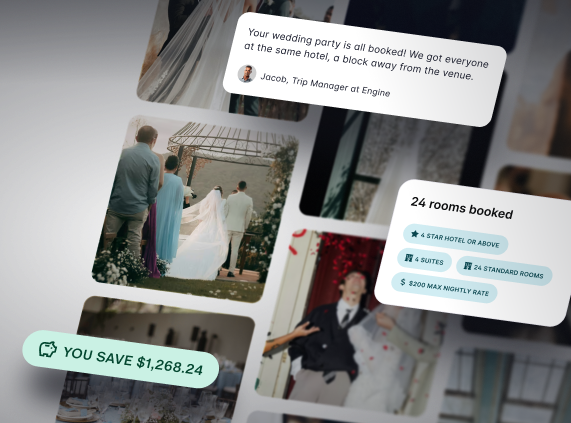
How do we account for families sharing rooms versus individuals needing their own?
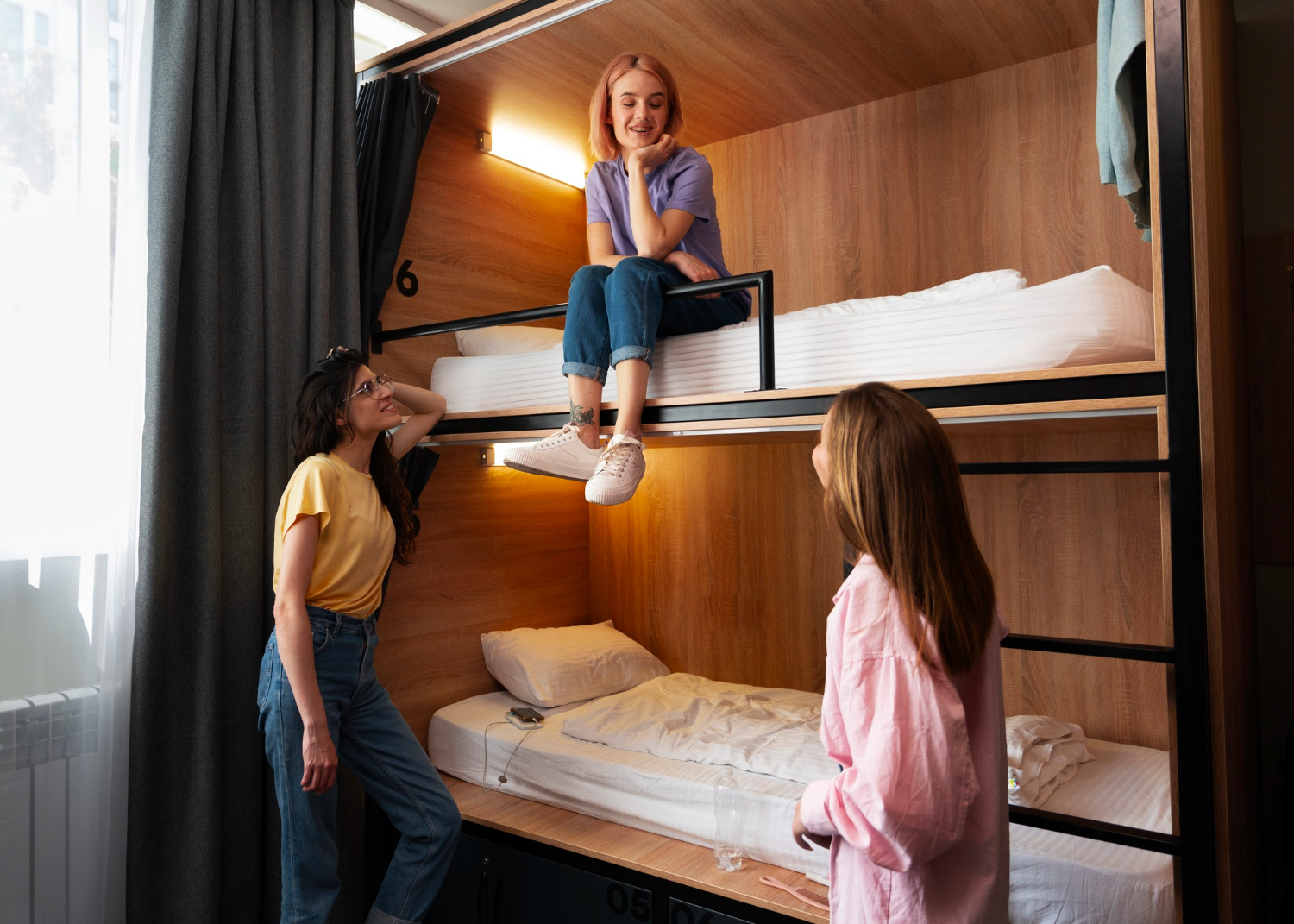
When you request a wedding room block, you do not need a perfect one room per guest count. The simplest and most accurate approach is to estimate how many of your guests will likely share a room, how many will need their own, and then build a block based on traveling households, not individual headcount.
That means couples often share one room, parents with young children may share one room or book a suite, and single guests usually need their own. Instead of guessing wildly, you can use your guest list, RSVP expectations, and family groupings to create a realistic estimate that helps you avoid overbooking, underbooking, or signing a hotel contract that feels too risky.
For many couples, this part of wedding planning feels surprisingly stressful. You are not just booking hotel rooms. You are trying to predict real guest behavior months in advance. That is exactly why having a structured, side by side hotel comparison process matters. Room Blocks by Engine helps couples organize quotes, compare terms, and move forward with more confidence, without the endless back and forth.

Start with households, not total guests
A common mistake is to look at your wedding guest count and assume it translates directly into room count. It rarely does.
A better method is to sort your likely hotel guests into groups such as:
- Couples who will share one room
- Families with children who may share a room or want a larger room type
- Single guests who will likely want their own room
- Wedding party members who may share with a partner or book separately
- Older relatives who may prefer convenience and book closer to the venue
This gives you a much more realistic picture of demand.
A simple way to estimate room needs
Here is a practical framework:
- Identify how many guests are coming from out of town
- Group those guests by household or travel party
- Estimate which households will likely stay at the hotel
- Add a small buffer for last minute bookings or changes
For example, if 80 guests are traveling for your wedding, that might translate into only 35 to 45 actual rooms, depending on how many are couples or families.
Why families and solo guests should be considered differently
Not every guest books the same way, and that matters when requesting quotes from hotels like Marriott, Hilton, Hyatt, Hampton Inn, Embassy Suites, Holiday Inn, or Courtyard.
Families often prioritize space and convenience
Families traveling with children may care less about the absolute lowest rate and more about things like:
- Rooms with two queen beds
- Suites with extra space
- Free breakfast
- Parking
- Easy access to the wedding venue
Some families will share one standard room. Others may prefer a suite or even skip the block entirely if they choose a nearby vacation rental. Because of that, it helps to ask hotels what room types are available, not just the lowest nightly rate.
Individual guests usually care about price and simplicity
Single guests, younger friends, and some extended family members often want:
- A lower room rate
- A simple booking link
- Flexible cancellation terms
- A convenient location near other guests
These guests are more likely to book a standard king or queen room on their own, so it is important to have enough entry level room options in the block.
How to estimate your wedding room block without overcommitting
You do not need to lock in an enormous number of rooms on day one. In fact, many couples are better off starting conservatively.
According to Room Blocks by Engine wedding guidance, many couples begin by requesting proposals from 3 to 5 hotels and often add rooms later if needed, as long as inventory remains available. That can be especially helpful if you are still waiting on RSVPs or are unsure how many guests will actually stay overnight.
A practical room block planning approach
- Couples: One shared room; count by couple, not by individual
- Families with children: One room or suite; ask about two-queen rooms and suites
- Single guests: One room each; include enough standard rooms at a lower rate
- Wedding party: Mixed booking pattern; check with them early instead of guessing
- Older relatives: One room per couple or individual; prioritize convenience and easy access
Questions to ask before you finalize your quote request
How many guests are truly likely to stay overnight?
Local guests may not need a room, even if they attend the wedding. Out of town guests are the key audience for your block.
Which guests are likely to share?
Think in terms of real travel habits. Married couples and parents with children often share. Single friends usually do not.
Do you need more than one hotel option?
Many weddings benefit from offering guests a choice between two price points. For example:
- A full service hotel near the venue
- A more budget friendly option a short drive away
This works especially well when your guest list includes both families and younger friends with different budgets.
Are you being asked to commit to too many rooms?
This is one of the most important questions. A contracted block can offer stronger rates and perks, but it may also come with minimums or attrition requirements. A courtesy block may offer more flexibility with less financial risk. Room Blocks by Engine helps couples compare these details clearly before they commit.
How Room Blocks by Engine makes this easier
The hard part is not just estimating rooms. It is comparing hotel options, understanding the fine print, and knowing whether a quote actually fits your wedding.
Room Blocks by Engine simplifies that process by letting couples search hotels near their venue, receive proposals from selected properties, and compare rates, perks, and terms in one place.
Instead of calling multiple hotels yourself and trying to decode every offer, you can review your options with much more clarity and less stress. That fits the brand’s goal of helping couples feel supported through one of the most overwhelming parts of wedding planning.
Build a room block that fits real guest behavior
The best wedding room block is not the biggest one. It is the one built around how your guests are actually likely to travel.
Think in households. Assume couples will usually share. Plan for singles to need their own rooms. Give families flexible options where possible. Most importantly, avoid guessing in a vacuum when you can compare real hotel proposals and make a smarter decision from the start.
A thoughtful room block helps your guests feel taken care of, and it gives you one less thing to worry about during wedding planning.
Make guest accommodations feel easy from the beginning
Estimating rooms for families, couples, and solo guests does not have to be complicated. When you break your guest list into real travel groups and compare hotel offers carefully, the process becomes much more manageable.
Ready to find your perfect room block without the stress? Start comparing hotels with Room Blocks by Engine today. Start comparing here by first choosing the city where you will host your wedding and narrowing down the hotels that fit your guests best.


.svg)
BOOKING GROUP TRAVEL WILL NEVER BE THE SAME.