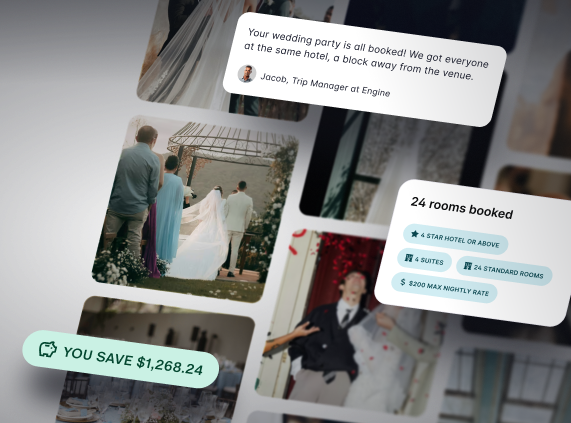
How do we calculate the right number of rooms if many guests haven’t RSVP’d yet?

You don't need a final guest count to get the ball rolling on hotel stays! Start with a thoughtful estimate based on your guest list and location, then pick a room block that lets you adjust as those 'Yes!' RSVPs start rolling in.
For most couples, the goal is not to predict the exact final number on day one. It is to reserve enough rooms to support your guests without overcommitting and creating unnecessary financial risk. That is especially important if you are comparing a courtesy block versus a contracted block, where minimums and attrition can matter.
If this part of wedding planning feels stressful, you are not alone. Guest accommodations often become one of those hidden logistics that suddenly feels bigger than expected. Between out of town family, wedding party needs, and guests booking on different timelines, it can be hard to know where to start. With a smart estimate and the right team in your corner, locking in your guest rooms is actually one of the easiest 'I dos' on your list.

Why estimating your room block matters early
Wedding hotel blocks usually work best when you begin planning well before the wedding date. Starting early gives you more hotel options, more rate visibility, and a better chance of securing useful perks. It also gives you room to make smart adjustments later instead of rushing when availability is tighter.
Hotels like Marriott, Hilton, Hyatt, Hampton Inn, Holiday Inn, and Embassy Suites often evaluate room block requests based on your dates, expected room count, and overall demand in the area. That means your initial estimate matters, but it does not have to be perfect.
The key is to build a reasonable starting point and avoid two common mistakes:
- Blocking far too many rooms before you know demand
- Waiting too long and losing better rates or availability
How to estimate the right number of rooms before RSVPs are final
Start with the number of out of town households
The easiest place to begin is not your full guest count. It is the number of households likely to need a hotel.
For example, if you invited 140 guests, not all 140 need a room. Some are local. Some are couples or families sharing a room. Some may stay with relatives.
A better first question is:
How many invited households will probably need overnight accommodations?
Look at your guest list and group people into categories:
- Out of town guests who will almost certainly need a hotel
- Wedding party members and immediate family
- Local guests who may still want a room for convenience
- Guests likely to stay with family or use a vacation rental instead
That gives you a more realistic room demand estimate than using headcount alone.
Think in households, not individuals
Most hotel rooms serve one couple, one individual, or one family unit. That is why room block planning works better when you estimate by household.
This is not a final answer. It is a planning tool. Once you have this number, you can decide whether to request one block, multiple hotel options, or a smaller first allotment with room to grow.
Use your wedding style and location as a clue
Your wedding details affect guest behavior more than many couples expect.
Guests are more likely to book hotel rooms when:
- The wedding is in a destination or resort area
- The venue is far from where most guests live
- The celebration includes multiple events across the weekend
- Transportation or parking is limited
- The wedding ends late and guests prefer convenience
For example, a downtown wedding with a welcome party and brunch may create more hotel demand than a local afternoon wedding where most guests can drive home.
A practical rule: start conservatively, then expand if needed
One of the safest strategies is to begin with a smaller, realistic room count and add more rooms later if booking pace is strong. Many hotels are more open to increasing a block than decreasing a committed number.
This is especially helpful if you are still waiting on RSVPs or have guests who tend to make travel plans late.
When a courtesy block may be the better fit
If you are unsure how many rooms your guests will actually use, a courtesy block can reduce stress.
Courtesy blocks generally do not require the same financial commitment as contracted blocks, and unused rooms are typically released after the cutoff date without penalties. That flexibility can be very helpful when your numbers are still uncertain.
Room Blocks by Engine also explains the difference between courtesy and contracted blocks, along with how modifications and cutoff dates work.
When a contracted block may still make sense
A contracted block can be a strong option if you have a clear number of traveling guests and want stronger rate protection or added perks. But it is important to understand the minimum commitment, cancellation terms, deposit expectations, and attrition requirements before signing. Room Blocks by Engine helps couples compare those details clearly so they are not trying to interpret hotel language alone.
Questions to ask before choosing your room count
How many guests are definitely traveling?
Start with the guests you already know will need rooms, such as the wedding party, immediate family, and anyone flying in.
Are guests likely to book early or late?
Some groups book as soon as they receive the save the date. Others wait until they have formal RSVP details. If your guests are not early planners, flexibility matters even more.
Do you need more than one hotel option?
Many couples benefit from requesting proposals from 3 to 5 hotels so guests can choose between price points and styles. That might mean one full service hotel near the venue and one more budget friendly option nearby. Room Blocks by Engine is built to help couples compare proposals, rates, and perks in one place instead of calling hotels one by one.
A simple planning timeline
9 to 12 months before the wedding
Estimate your likely room needs, identify guest travel patterns, and begin comparing hotel options.
6 to 8 months before the wedding
Confirm your preferred hotel or hotels, review the block type, and check for important details like parking, breakfast, suites, and cutoff dates.
2 to 4 months before the wedding
Watch booking pace, remind guests to reserve before the cutoff date, and ask whether more rooms can be added if demand is stronger than expected.
Final weeks before the wedding
Share final hotel details with guests and confirm any last updates with the property.
How to avoid hidden fees and costly surprises
Even if the room rate looks good, always review the full picture. Ask about:
- Taxes and nightly fees
- Parking charges
- Resort or destination fees
- Welcome bag handling fees
- Deposit requirements
- Suite pricing for the wedding party
- Extra night availability for guests arriving early or staying later
This is usually where the 'wedding brain' kicks in and couples start to feel overwhelmed, but comparing blocks is about so much more than just a price tag, it’s about the fine print, too.
Room Blocks by Engine keeps you organized by stacking up rates, perks, and rules side-by-side. Plus, it’s a totally free service, giving you one less thing to worry about during your busy planning season!
The easiest way to feel confident about your room block
You do not need perfect RSVPs to make a smart decision. You just need a sensible estimate, a flexible strategy, and a clear view of your options.
When couples try to figure this out alone, it can feel like a lot at once: how many rooms, which hotels, which rates, which contract terms, and what happens if plans change. That is exactly why having a platform that helps compare, organize, and simplify the process can make such a difference. Room Blocks by Engine is positioned to take one of the more confusing wedding logistics and make it easier for couples from the start of planning.
Plan your wedding room block with less stress and more clarity
If many guests have not RSVP’d yet, start with your out of town households, think in rooms instead of guest count, and choose a block strategy that gives you room to adjust. That approach helps you avoid overcommitting, protect your guests’ options, and keep one more wedding task from becoming overwhelming.
Ready to find your perfect room block without the stress? Start comparing hotels with Room Blocks by Engine today. Start comparing here by first choosing the city where you’ll have your wedding, then review your options with confidence and pick the fit that feels easiest for you.



.svg)
BOOKING GROUP TRAVEL WILL NEVER BE THE SAME.