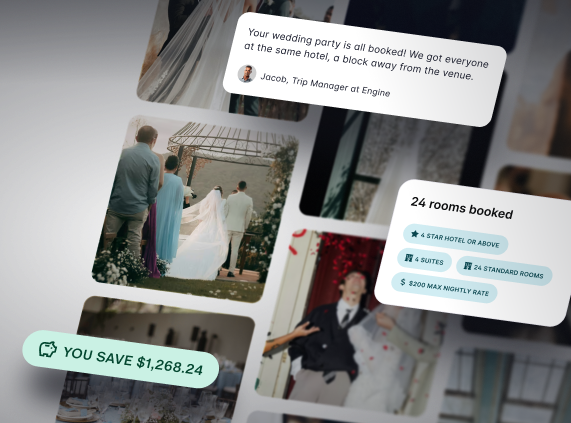
How do we check how many rooms have been booked?

If your wedding checklist is starting to feel like a full-time job, take a breath, tracking your guest reservations is way simpler than you think. In most cases, you can track room pickup through your hotel’s booking report, your reservation link, or your Room Blocks by Engine support contact, depending on how your block is set up. The platform also stays available to help with questions, updates, and contract details, so you are not left trying to interpret everything on your own.
For couples, this matters because your booked room count affects more than curiosity. It helps you decide whether you need to add rooms, whether your current block size still makes sense, and whether you are getting close to a cutoff date. If you have a contracted block, it can also help you monitor whether you are on track to meet your minimum commitment and avoid unnecessary stress later.
Why your booked room count matters during wedding planning
A wedding room block is not something you want to set and forget. Guest travel plans change, RSVPs shift, and some people book early while others wait until the last minute. Keeping an eye on booked rooms helps you stay organized and make better decisions throughout the planning process.
It is especially helpful for:
- Understanding whether your original room estimate was realistic
- Deciding whether to request more rooms
- Catching slow pickup before the cutoff date
- Avoiding overcommitting on a contracted block
- Giving guests enough options across different price points
This is one reason so many couples feel overwhelmed by the process. You are trying to predict guest behavior, comparing rates, managing deadlines, and keeping everything clear for family and friends. Room Blocks by Engine is built to make that process easier by organizing proposals, helping with hotel communication, and supporting you as changes come up.
The easiest ways to check how many rooms have been booked
Ask for a pickup report
To get a real-time headcount, just request a pickup report. It sounds technical, but it’s really just a quick snapshot that shows how many rooms in your block are officially off the market.
If your wedding block is at a hotel like Marriott, Hilton, Hyatt, or Embassy Suites, the sales or group coordinator can typically provide this information.
A pickup report may include:
- Total rooms blocked
- Total rooms booked
- Remaining rooms available in the block
- Arrival and departure patterns
- Booking pace compared with your cutoff date
If you are working through Room Blocks by Engine, you do not have to feel like you are chasing down answers alone. The platform supports couples throughout the process, including when updates or questions come up after the block is confirmed.
Review your booking link activity
Many wedding room blocks use an online reservation link so guests can book directly. In some cases, the hotel or your contact can tell you how many reservations have come through that link. This can be one of the fastest ways to understand how your block is performing without needing a full contract review.
Check in before key deadlines
Treat your cutoff date like a hard deadline, not a suggestion. If you wait until the last minute to check your numbers, you might find those unused rooms (and your discount!) have already been released back to the public.
Courtesy block vs contracted block: why tracking matters differently
Knowing which one you’re signed up for is the secret to avoiding those 'oops' moments later on.
Courtesy blocks
A courtesy block usually gives you more flexibility because there is no financial commitment for unused rooms. The hotel sets aside rooms until the cutoff date, and then any unbooked rooms are released. That makes tracking helpful, but usually less risky.
If pickup is strong, you may want to ask whether more rooms can be added. If pickup is slow, you may simply remind guests to book before the deadline.
Contracted blocks
A contracted block requires much closer attention. With this type of block, you may be responsible for filling a minimum percentage of rooms, often referred to as attrition. For example, if your contract requires 80 percent pickup, you need to know how many rooms have actually been booked so you are not surprised later.
This is where couples often benefit from expert support. Contract language, room counts, deposits, and reduction policies can be confusing when you are already balancing guest lists, seating charts, and vendor decisions. Room Blocks by Engine helps explain these terms before and after booking so you can move forward with more confidence.
What to do if bookings are lower or higher than expected
If fewer rooms are booked than expected
Take a breath. This is common, especially before the RSVP deadline.
Start with these steps:
- Check how far away your cutoff date is
- Compare your booked room count with guest RSVP trends
- Send a friendly reminder to guests who may still need accommodations
- Ask the hotel or your support contact whether any changes are possible
If you have a contracted block, ask early whether reductions are allowed before a certain date. Some hotels permit this, while others do not after the contract is signed.
If more rooms are booked than expected
That is usually a good sign, but it also means you may need to move quickly. Many couples start with a smaller room block and add more later if the hotel still has inventory. Hotels are often more open to increasing a block than reducing one, which is why a staged approach can work well for weddings.
Tips to make room block tracking easier from the start
Book early, but not too early
Most couples begin the room block process 9 to 12 months before the wedding. That window usually gives you better access to pricing and availability without getting too far ahead of hotel inventory systems.
Choose a realistic number of rooms
One of the biggest mistakes couples make is blocking too many rooms too soon. A more realistic starting number can reduce pressure and make tracking simpler as guest plans become clearer.
Compare more than just room rate
When reviewing hotel options, look at parking, breakfast, suite availability, welcome bag policies, and possible perks. The cheapest rate is not always the best value for your guests or your wedding weekend flow. Room Blocks by Engine organizes rates, perks, and savings in one place so couples can compare options more clearly before choosing a hotel.
A simpler way to stay on top of your wedding room block
Checking how many rooms have been booked should not feel like a mystery. With the right support, it becomes a simple planning check-in instead of another stressful task. Track your bookings regularly, know your cutoff date, understand whether you have a courtesy or contracted block, and ask for help before small issues turn into bigger ones.
Keep your room block organized with confidence
Your wedding guests want an easy place to stay, and you deserve an easier way to manage it. Room Blocks by Engine helps couples compare hotels, understand proposals, and navigate room block changes with far less back and forth, so the process feels clear from the beginning.
Ready to find your perfect room block without the stress? Start comparing hotels with Room Blocks by Engine today by first choosing the city where you will host your wedding, then reviewing your best-fit options in one place.




.svg)
BOOKING GROUP TRAVEL WILL NEVER BE THE SAME.