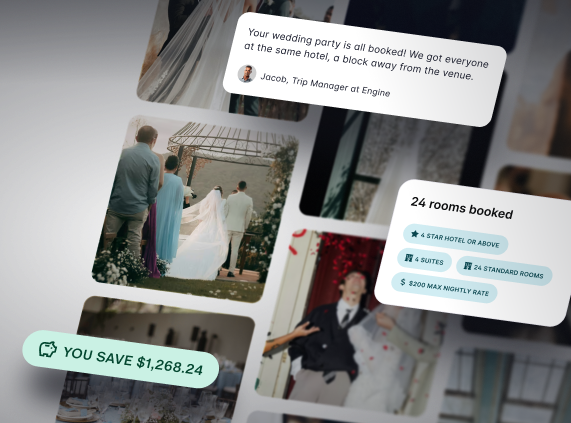
How do wedding room blocks work for hotels with dynamic pricing?

Wedding room blocks still work even when hotels use dynamic pricing, but they work differently than couples expect.
If you’ve ever noticed that a hotel room costs $150 on Tuesday but $350 on Saturday, you’ve seen Dynamic Pricing in action. When a hotel uses dynamic pricing, its public room rates change daily based on demand, availability, seasonality, and local events. A wedding room block does not freeze but rather creates a negotiated group rate or protected inventory window that balances price stability for your guests with flexibility for the hotel.
The secret is understanding what is protected, what can change, and how to choose the right type of room block so your guests are not left scrambling or overpaying.

What Is Dynamic Pricing in Hotels?
Dynamic pricing means hotel room rates fluctuate based on real time demand. Most major hotel brands in the United States use this model, including Marriott, Hilton, Hyatt, and IHG properties.
Rates can change based on:
- Time of year and wedding season
- Local events or conventions
- How full the hotel already is
- How close the date is
- Day of the week
This is why guests may see different prices on travel sites from one day to the next. It is normal and expected, but it can feel stressful when you are trying to plan for dozens of guests.
How Wedding Room Blocks Work With Dynamic Pricing
When you book a wedding room block at a hotel with dynamic pricing, the hotel typically offers one of two structures.
Courtesy Room Blocks
A courtesy block sets aside a limited number of rooms for your guests at a specific rate until a cutoff date.
How it works with dynamic pricing:
- The hotel offers a group rate that may be slightly discounted or aligned with current market pricing.
- Rates are protected only until the cutoff date.
- If public rates drop below your group rate, guests may find cheaper options online.
- If rates rise, your group rate may become the better value.
Courtesy blocks are popular for smaller weddings or destination weddings where guest attendance is less predictable.
Contracted Room Blocks
A contracted block is a formal agreement where the hotel guarantees a set number of rooms.
How it works with dynamic pricing:
- The hotel locks in a negotiated rate that does not fluctuate with daily pricing.
- Inventory is guaranteed for your guests.
- You agree to fill a minimum percentage of rooms, known as attrition.
- These blocks often include better perks and stronger price protection.
Contracted blocks are ideal for larger weddings or peak season dates where availability is a concern.
What Is Actually Protected in a Dynamic Pricing Environment?
This is one of the most misunderstood parts of wedding room blocks.
A room block typically protects:
- Availability for your guests
- A specific group rate or pricing structure
- A booking window through the cutoff date
- Certain perks or concessions, such as upgrades or welcome bag tables
A room block does not always guarantee:
- That your rate will always be lower than public rates
- That rates will adjust downward if the market drops
- That unlimited rooms are available
This is why comparing multiple hotel proposals matters so much.
How to Secure the Best Rates for Your Guests
Request Multiple Hotel Options
Never rely on just one hotel. Rates and flexibility vary widely, even among similar brands.
Ask About Rate Review Clauses
Some hotels will agree to review pricing if public rates drop significantly. This is not guaranteed, but it is worth asking.
Avoid Overbooking Rooms
Dynamic pricing makes attrition risky. Start conservatively and add rooms later if needed.
Consider Location Flexibility
Including hotels slightly farther from the venue often leads to better pricing and availability.
Managing RSVPs and Room Blocks Without Stress
For many couples, the tricky part is simply knowing who booked where and if the room block minimums are on track.
This is where organization matters:
- Monitor pickup regularly
- Communicate cutoff dates clearly to guests
- Add rooms early if your block is filling quickly
- Avoid last minute changes whenever possible
Using a centralized platform makes this dramatically easier than managing emails, spreadsheets, and hotel contacts on your own.
Why Dynamic Pricing Makes DIY Room Blocks Harder
When you contact hotels individually, you are responsible for:
- Comparing fluctuating rates
- Understanding contract language
- Tracking deadlines and attrition
- Negotiating concessions
- Managing follow ups
Dynamic pricing adds complexity that many couples are not prepared for, especially during an already overwhelming planning process.
How Room Blocks by Engine Makes the Process Easier
Room Blocks by Engine simplifies wedding room blocks by:
- Sending your request to multiple hotels at once
- Organizing proposals side by side
- Explaining dynamic pricing differences clearly
- Helping you avoid risky contracts
- Supporting you through booking and adjustments
Instead of guessing, you can make confident decisions based on clear information.
A Smarter, Simpler Way to Handle Wedding Room Blocks
Dynamic pricing does not mean wedding room blocks are impossible or risky. It simply means they need to be structured thoughtfully. With the right timing, realistic expectations, and proper guidance, you can protect your guests from price spikes and avoid unnecessary stress.
Ready to find your perfect room block without the stress?
Start comparing hotels with Room Blocks by Engine today by first choosing the city where you are getting married, selecting your dates, and letting everything else fall into place with expert support.



.svg)
BOOKING GROUP TRAVEL WILL NEVER BE THE SAME.