How many rooms should we reserve for our wedding weekend?
Most couples should reserve hotel rooms for about 50 to 70 percent of their out of town guest list. That number gives your guests convenient options without putting you at risk of booking too many rooms.
If that answer already makes you feel a little calmer, you are not alone. Figuring out how many rooms to reserve for a wedding weekend is one of the most common and stressful questions couples face, especially when juggling RSVPs, budgets, and guest expectations. The good news is that you do not need to guess, and you do not need to manage this process alone.
Why this question matters more than couples expect
A great room block is a win-win for everyone. For your guests, it takes the guesswork out of where to stay and what to pay. For you, it’s about being a strategic host, working with the hotel to secure enough space for your crew without over-committing. When you hit that sweet spot, the logistics just fade into the background.
Reserve too few rooms and guests scramble for last minute options at higher prices. Reserve too many and you may be responsible for unused rooms, depending on your agreement. The goal is balance, not perfection.
A simple formula to estimate how many rooms you need
Start with these.
Step 1: Count your out of town guests
Focus only on guests who will need a hotel. Local guests usually stay at home, even if they attend multiple wedding events.
Example:
- Total guest list: 150
- Local guests: 60
- Out of town guests: 90
Step 2: Estimate how many will book your hotel block
Most couples find that 50 to 70 percent of out of town guests use the room block. Some will stay with family, book vacation rentals, or choose different hotels.
Using the example above:
- 90 out of town guests
- 50 to 70 percent booking rate
- Approximately 45 to 63 guests booking rooms
Step 3: Convert guests into rooms
Many guests share rooms. Couples, families, and friends often book together.
A safe planning estimate is 1 room for every 1.5 to 2 guests.
That means:
- 45 to 63 guests
- Roughly 25 to 40 rooms total
This range gives you flexibility without overcommitting.
Factors that can increase or decrease your room count
Every wedding is unique. These details can shift your final number up or down.
Your wedding location
- Destination weddings or resort towns often need more rooms because nearly everyone travels.
- Major cities like New York, Chicago, or Los Angeles may need fewer rooms because guests have more lodging choices.
Length of the wedding weekend
If you have a welcome party, farewell brunch, or multiple events, guests are more likely to stay at your recommended hotel for convenience.
Hotel proximity to the venue
Hotels within walking distance or a short shuttle ride typically book faster than hotels farther away.
Time of year
Busy seasons, holiday weekends, and popular wedding months can push guests to book earlier and fill blocks faster.
One hotel or multiple hotels?
For most weddings, two to three hotels works best. This gives guests options at different price points and styles.
A common approach:
- One main hotel near the venue
- One slightly more affordable option nearby
- Optional boutique or extended stay hotel for longer visits
National chains like Marriott, Hilton, Hyatt, and IHG are often popular with guests because of loyalty programs and familiar amenities. Boutique hotels can be a great addition if they fit your wedding style.
How to avoid paying for unused rooms
This is one of the biggest concerns couples have, and for good reason.
Here are a few smart strategies:
- Start smaller and add rooms later. Hotels are usually happy to increase a block if availability allows.
- Ask about courtesy blocks. These do not require a financial commitment and release unused rooms at a set date.
- Understand attrition clearly. If you choose a contracted block, know exactly how many rooms must be filled and by when.
- Set a realistic cutoff date. This encourages guests to book early and gives you clarity before final deadlines.
Using a platform that clearly explains these terms can save you from expensive surprises.
Managing RSVPs and guest expectations
Once your room block is confirmed:
- Share hotel information on your wedding website early
- Include booking links and cutoff dates
- Gently remind guests as the date approaches
Clear communication reduces last minute questions and helps your block fill naturally.
Why couples use Room Blocks by Engine for this step
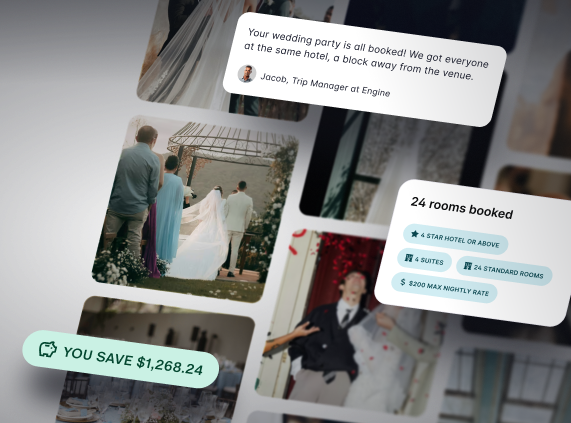
The 'DIY' way of booking blocks usually involves a lot of waiting and a lot of spreadsheets. Room Blocks by Engine replaces that stress with a simple, organized dashboard, making it easy to compare rates and understand the fine print without the back-and-forth.
With Room Blocks by Engine, you can:
- Compare multiple hotels at once
- See rates, perks, and policies clearly
- Get help choosing the right number of rooms
- Adjust your block as guest plans become clearer
Instead of guessing, you can make confident decisions backed by experience.
A Simple, Smart Approach to Wedding Room Blocks
You do not need to reserve the perfect number of rooms. You just need a realistic plan and the right support.
Most couples are safe reserving rooms for about half to two thirds of their out of town guests, starting with a conservative number and adjusting as bookings come in. With the right approach, hotel room blocks can be one of the easiest parts of wedding planning.
Ready to find your perfect room block without the stress?
Start comparing hotels with Room Blocks by Engine today. Begin by choosing the city where you are getting married, see your options side by side, and book with confidence knowing you did not overthink or overbook.

.svg)
BOOKING GROUP TRAVEL WILL NEVER BE THE SAME.