Should we list one hotel as the “primary” and others as optional?
Planning wedding room blocks can feel like one more decision on an already full list. TLuckily, the most guest-friendly move is actually the easiest: pick a 'star of the show' hotel and offer a few supporting acts for variety. This gives your guests a clear first choice, while still offering flexibility for different budgets, travel styles, and loyalty preferences.
For most weddings, the best setup is one main hotel that feels like the natural home base for your wedding weekend, plus one or two additional hotels nearby. That approach keeps things simple for guests and helps you avoid the confusion that can happen when everyone is left to sort through too many choices on their own.
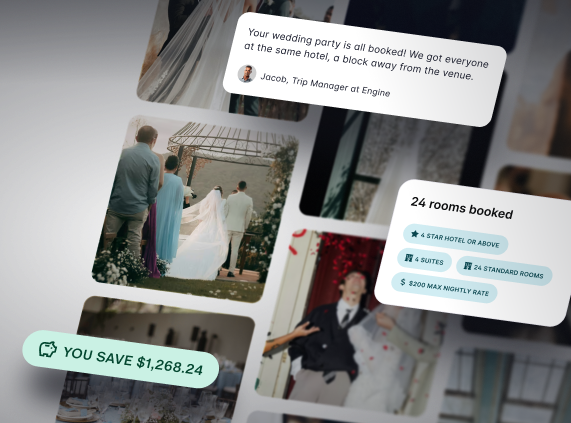
If you are feeling overwhelmed by the idea of comparing hotels, rates, perks, and policies, you are not alone. This is exactly where Room Blocks by Engine can make the process easier by helping you compare options, organize proposals, and understand the details without chasing hotels one by one.

Why one primary hotel usually works best
Your wedding guests want convenience. Many of them are booking travel, requesting time off, arranging childcare, and trying to stay on top of your wedding schedule all at once. When you present one clear “best choice,” you reduce decision fatigue and make it easier for them to book quickly.
A primary hotel also helps create a smoother wedding weekend experience. When more guests stay in the same place, it is easier to coordinate welcome bags, transportation, after-parties, brunch plans, and casual meetups in the lobby or bar.
Benefits of having a primary hotel
- Gives guests a clear first choice
- Helps concentrate bookings into one block
- Makes transportation and logistics easier
- Simplifies communication on your wedding website
- Can strengthen your negotiating position if more rooms are likely to be picked up
Many couples choose a recognizable brand for their primary block, such as Marriott, Hilton, Hyatt, Holiday Inn, Westin, Hampton Inn, or Embassy Suites, because guests tend to feel comfortable booking a hotel name they already know.
Why optional hotels are still a smart idea
One hotel might be the star of the show, but every guest brings their own unique vibe (and budget) to the party. Some want the lowest nightly rate possible. Others care more about walkability, free breakfast, suite options, parking, or loyalty points. Offering one or two backup choices makes your room block more guest-friendly without making it complicated.
This is especially helpful if you have a wide mix of guests, such as:
- Older relatives who want a quieter stay
- Friends who want to be close to nightlife
- Families who need larger rooms or suites
- Guests with different budgets
- Guests arriving early or staying extra nights
The key is to keep the list short. In most cases, one primary hotel and one or two optional hotels is enough.
When to choose a primary hotel
A primary hotel makes the most sense when one property clearly stands out in one or more of these areas:
It is closest to your venue
If one hotel is the easiest for guests to get to, that should usually be your lead option.
It fits the majority of your guest budget
You do not need the cheapest hotel to be primary, but it should be a comfortable fit for a large portion of your guests.
It offers the best overall wedding weekend experience
Maybe it has a nicer lobby for gathering, better shuttle access, easier parking, or a more polished feel that matches your event.
It has the strongest room block terms
This matters more than many couples expect. A hotel with a better rate, more flexible cutoff date, easier booking link, fewer fees, or stronger perks may be the smarter primary choice.
How to present the options without confusing guests
Once your blocks are confirmed, keep the wording on your wedding website simple and direct. Guests do not need a long explanation. They just need to know where to start.
A simple way to structure it
- Primary Hotel: Best for most guests. Closest to venue or main wedding events
- Optional Hotel 1: Best for budget-friendly guests. Lower nightly rate or free breakfast
- Optional Hotel 2: Best for guests wanting more amenities. Suites, upgraded rooms, or extended stay options
You can also label them clearly on your wedding website:
- Primary Hotel: Our recommended hotel for most guests
- Optional Hotel: A great lower-cost option nearby
- Optional Hotel: Ideal for families or guests staying longer
It’s such a thoughtful touch, it shows your guests you’ve already done the heavy lifting so they can just focus on the fun!
How this affects your room block strategy
Choosing a primary hotel is not just about guest convenience. It also helps you manage your room blocks more effectively.
If you spread guest demand too evenly across too many hotels, it can be harder to fill each block. That matters even more if you are considering a contracted block, where you may be responsible for meeting a minimum room pickup.
A courtesy block is often more flexible, since unused rooms are typically released after the cutoff date without penalty. A contracted block may offer better rates or perks, but it can carry more risk if you reserve more rooms than your guests actually need.
That is why many couples start with a realistic number of rooms, focus on one main hotel, and expand only if booking demand is strong.
Tips for getting the best rates and avoiding hidden costs
As you compare hotel options, look beyond the nightly rate. The lowest sticker price is not always the best value.
Watch for these details
- Parking fees
- Resort or destination fees
- Welcome bag handling fees
- Breakfast inclusions
- Suite availability
- Extra-night rate policies
- Cutoff dates
- Deposit requirements
- Attrition or minimum pickup obligations
This is one reason room block booking can feel stressful. Two hotels may look similar at first, but the fine print can make a big difference. Room Blocks by Engine helps couples compare proposals in one place so it is easier to spot the details that matter before committing.
Common mistake: giving guests too many choices
Couples often think that more hotel options will be more helpful. In reality, too many choices can create more hesitation and fewer bookings. Guests may delay because they are unsure which hotel you really prefer.
A simple, well-organized setup usually works best:
The ideal approach for most weddings
- Choose one hotel as the primary option
- Add one or two nearby alternatives
- Make the differences between them easy to understand
- Keep your website wording clear and brief
- Track booking pace so you can adjust if needed
That keeps your wedding accommodations feeling thoughtful instead of overwhelming.
Make wedding guest booking simpler from the start
The best room block strategy is usually the one that feels easiest for your guests and safest for you. In most cases, that means choosing one primary hotel as your recommended option and offering one or two optional hotels for flexibility. It creates clarity, supports different budgets, and makes your wedding weekend easier to manage.
And if comparing chains, rates, policies, and room block terms already sounds exhausting, that is exactly why Room Blocks by Engine exists. Instead of emailing or calling hotels one by one, you can compare proposals, review important details, and move forward with more confidence.
Choose your wedding hotel options with less stress
Direction meets choice! By pairing a primary hotel with a few 'just-in-case' options, you’re serving up a guest experience that’s as seamless as your first dance and a total breeze to handle.
Ready to find your perfect room block without the stress? Start comparing hotels with Room Blocks by Engine today. Start comparing here by first choosing the city where you will host your wedding, then review your best hotel options in one place with less guesswork and more confidence.


.svg)
BOOKING GROUP TRAVEL WILL NEVER BE THE SAME.