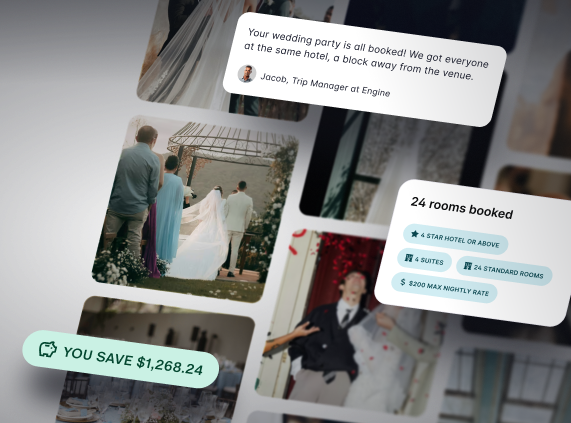
Should we reserve fewer rooms upfront and add more later, or book the full estimated amount from the start?
In most cases, it is smarter to start with a realistic, slightly conservative room block and add more rooms later if needed instead of committing to your full estimate upfront.
That approach usually gives couples more flexibility and less financial risk. If you book too many rooms too early, you may end up dealing with unused inventory, stricter contract terms, or unexpected costs. If you start with a manageable number and your guests book quickly, you can often ask the hotel to add more rooms, as long as inventory is still available.
For engaged couples already juggling venues, guest lists, RSVPs, and travel questions, this can feel like one more complicated decision. The good news is that it does not have to be. With the right hotel options and clear terms, your wedding room block can be one of the easiest parts of planning, especially when Room Blocks by Engine helps you compare proposals, understand the fine print, and choose the option that fits your guest count with confidence.
Why starting smaller is usually the safer choice
Guest lists have a mind of their own! Whether it’s family staying together in a rental or friends cashing in their travel points elsewhere, your hotel block doesn’t have to account for every single heart on your list. Understanding all those different travel styles is the secret to a block that actually fits your crowd.
That is why many couples prefer to begin with a smaller block and grow it if demand is there. This is especially helpful if you are still finalizing your guest list or waiting to see how many out of town guests will actually attend.
A smaller starting block can help you:
- Reduce the chance of overcommitting
- Avoid paying for rooms that go unused in a contracted block
- Keep your options open if guest plans change
- Test demand before asking for more inventory
- Feel less pressure during an already stressful planning season
According to Room Blocks by Engine's wedding FAQs, many couples do exactly this: they start with a smaller number of rooms and increase the block once guests begin booking, provided the hotel still has availability.
When booking the full estimated amount might make sense
There are a few situations where booking the full estimated number from the start may be worth considering.
You may want a larger block upfront if:
- Your wedding is during a peak travel weekend
- The wedding is in a destination with limited hotel inventory
- Most of your guests are traveling in from out of town
- You are working with a courtesy block that carries no financial commitment
- You already have a strong sense of how many rooms your guests will need
For example, if you are getting married in a busy downtown area, beach town, or popular wedding market where hotels like Marriott, Hilton, Hyatt, or Embassy Suites tend to fill quickly, waiting too long to secure enough rooms could leave your guests with fewer choices.
Still, the decision should depend on the type of room block you are considering.
How to estimate your wedding room block more accurately
No estimate is perfect, but a few practical steps can help you land on a number that feels smart from the start.
Start with these questions
1. How many guests are traveling from out of town?
These are the guests most likely to need hotel rooms.
2. How many households does that represent?
A room block is based on rooms, not individual guests. Couples, families, and friends may share.
3. Will guests stay one night or make it a weekend?
Some guests will want Friday and Saturday. Others may add Thursday or Sunday.
4. Are there nearby alternatives?
If your venue is near several hotel brands and price points, guests may spread out across options.
5. How early are you sending save the dates?
Earlier notice often helps you gauge interest sooner.
How to avoid hidden fees and contract surprises
This is where many couples get overwhelmed. A room block may look great at first glance, but the details matter.
Ask about these items before you commit
- Attrition requirements
- Deposit deadlines
- Cancellation terms
- Cutoff dates
- Parking fees
- Resort or destination fees
- Welcome bag handling charges
- Whether extra nights qualify for the group rate
Room Blocks by Engine helps couples compare these details side by side instead of chasing answers from multiple hotels on their own. The platform also helps explain contract language and supports couples through changes, which makes the process feel much more manageable.
The best approach for most weddings
For most couples, the best approach is simple:
Reserve a realistic base number, then add rooms if demand is strong
That strategy balances flexibility and protection. You avoid locking yourself into too much too soon, while still giving guests a reliable place to stay at a group rate.
It also fits how wedding planning actually works. Guest counts shift. Travel plans evolve. Family members book late. Starting with a thoughtful number and building from there tends to create less stress than trying to guess perfectly from day one.
And because hotels often prefer adding rooms over reducing them, this approach can work in your favor.
Make your guest accommodations easier from the beginning
Your wedding room block should make the weekend smoother for you and your guests, not add another layer of stress. Starting with fewer rooms upfront is often the safest move, especially if you want flexibility and peace of mind. Then, if bookings come in quickly, you can grow the block with more confidence.
The real challenge is not just choosing a number. It is comparing hotels, understanding block types, reviewing rates, spotting fees, and keeping everything organized while planning a wedding.
That is exactly where Room Blocks by Engine can help. The platform lets you compare hotel proposals in one place, understand your options clearly, and secure the right room block without all the back and forth. It is designed to make one of the more confusing parts of wedding planning feel simple and supported.
Reserve with confidence, not guesswork
The safest choice for most weddings is to start with a realistic room block and expand if needed. That gives you flexibility, helps protect your budget, and keeps the process feeling manageable.
Ready to find your perfect room block without the stress? Start comparing hotels with Room Blocks by Engine today. Start comparing here by first choosing the city where you will host your wedding, then review your options with confidence and reserve the block that fits your guests best.



.svg)
BOOKING GROUP TRAVEL WILL NEVER BE THE SAME.