What do couples need to decide before booking a wedding room block?

Before you sign anything, you just need to answer the 'big five': Where are we staying? How many rooms do we need? When should we book? What's our risk level? And how much flexibility do we want? Get those straight, and you’re golden.
Once that’s clear, booking a wedding room block becomes far less overwhelming and much easier to manage.
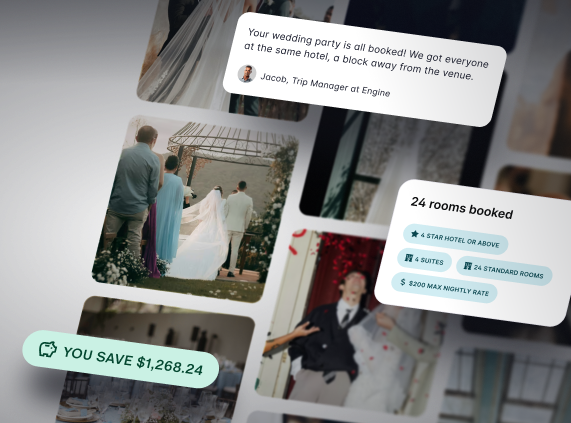
If you are feeling stressed or unsure, you are not alone. Hotel room blocks are one of the least intuitive parts of wedding planning, yet they play a huge role in your guests' experience. Believe it or not, this can actually be a smooth ride. When you lead with a solid plan and use Room Blocks by Engine to compare your options side-by-side, you’re saving yourself hours of back-and-forth and a whole lot of unnecessary stress.
1. Where Should Your Guests Stay?
One of the first decisions is location. This impacts convenience, pricing, and how many guests actually book within your block.
Things to consider
- Distance to your wedding venue
- Proximity to airports, highways, or public transportation
- Nearby dining, nightlife, or attractions for out of town guests
Most couples choose hotels within 10 to 20 minutes of the venue. In major cities, this may include neighborhoods rather than one exact address.
Common hotel options guests expect
Wedding guests are often most comfortable with familiar brands such as:
- Marriott and Courtyard by Marriott
- Hilton, Hampton Inn, or Embassy Suites
- Hyatt Place or Hyatt Regency
- Holiday Inn or Kimpton
Offering at least one well known hotel brand helps guests feel confident when booking.
2. How Many Rooms Do You Actually Need?
This is one of the most stressful decisions, but it does not need to be perfect.
A simple rule of thumb
- Estimate how many guests are traveling from out of town
- Assume about 70 percent of those guests will book a hotel
- Divide by two to estimate rooms, since many guests share rooms
For example, if 100 guests are traveling, around 35 hotel rooms is a reasonable starting point.
Pro tip
It is often safer to start with fewer rooms and add more later rather than overbooking and risking penalties. Room Blocks by Engine helps couples adjust room counts as bookings roll in.
3. When Should You Book Your Wedding Room Block?
Timing matters more than most couples realize.
Best booking window
Most couples should start the room block process 9 to 12 months before the wedding. Hotels typically do not release group rates more than a year out, but waiting too long can limit availability.
Special situations
- Peak wedding seasons and popular cities require earlier planning
- Holiday weekends book faster and may cost more
- Smaller weddings may have more flexibility closer to the date
Booking early gives you better rate protection and more hotel options.
4. What Type of Room Block Is Right for You?
Before booking, couples should understand the two main types of wedding room blocks.
Courtesy room blocks
- No financial commitment
- Unused rooms are released at the cutoff date
- Smaller room counts and less price protection
These are ideal for couples who want flexibility and minimal risk.
Contracted room blocks
- Guaranteed rooms at a locked in rate
- Often include perks like upgrades or welcome bag space
- Require a minimum number of rooms to be booked
Contracted blocks work well for larger weddings with many out of town guests.
Instead of flipping through different tabs and emails, Room Blocks by Engine lets you compare every detail in one view. It’s the easiest way to feel 100% confident in the choice you’re making.
5. What Is Your Cutoff Date?
The cutoff date is when unused rooms return to the hotel inventory.
Why this matters
- Guests who miss the cutoff may pay higher rates
- Rooms are no longer guaranteed after this date
Most cutoff dates are 30 days before the wedding, though some hotels allow extensions.
Clear communication with guests is key. Once your block is booked, include the cutoff date on your wedding website and invitations.
6. What Flexibility Do Your Guests Need?
Every guest list is different, so flexibility matters.
Ask yourself:
- Will guests arrive early or stay late?
- Do families need different room types?
- Are some guests on tighter budgets?
Many couples offer two hotels at different price points so guests can choose what works best for them. Room Blocks by Engine makes it easy to compare hotels across price ranges without juggling emails or spreadsheets.
7. How Will You Manage the Process?
Managing room blocks manually can be time consuming and confusing.
Couples often struggle with:
- Contacting multiple hotels
- Comparing rates and hidden fees
- Tracking proposals and contracts
- Understanding attrition and cancellation terms
This is where Room Blocks by Engine simplifies everything. Instead of emailing hotels one by one, you can request proposals, compare options, and finalize your block in one organized place, with expert support if you need it.

Book Your Wedding Room Block With Confidence, Not Stress
You should be able to compare hotels and lock in competitive rates without the stress of hidden fees or constant follow-up calls, and that’s exactly why Room Blocks by Engine exists. It puts everything you need to manage your guest rooms in one simple dashboard.
Ready to find your perfect wedding room block without the stress?
Start comparing hotels today with Room Blocks by Engine by first choosing your wedding city and dates, then let everything else fall into place.



.svg)
BOOKING GROUP TRAVEL WILL NEVER BE THE SAME.