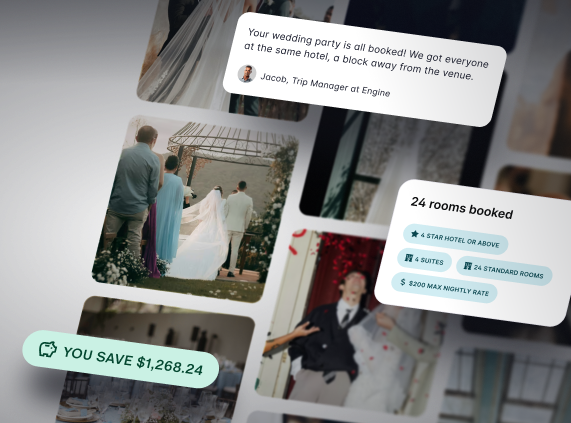
What do hotels need in order to provide wedding block rates?

When a hotel provides wedding block rates, it usually needs a few basic details first: your wedding date, wedding location, estimated number of rooms, the nights guests will stay, and any preferences around budget or hotel style. In some cases, hotels may also want to know whether you need a courtesy block or a contracted block, plus whether your guests may need extras like parking, breakfast, suites, or extended stay options.
That is the direct answer, but here is the part that often feels stressful for couples: getting those details together is only the first step. After that, you may still need to compare multiple hotels, review rates and perks, understand cut off dates, and watch out for terms that are easy to miss. That is exactly why many couples turn to Room Blocks by Engine, which helps organize proposals, compare options, and make the process feel far more manageable.
Why hotels ask for these details before quoting rates
Hotels do not usually create wedding block rates from a single email that says, “We need rooms for our wedding.” They need enough information to decide what they can offer, what inventory is available, and whether a discount makes sense for your weekend.
Here is what they typically need from you.
Your wedding date
Your date affects nearly everything. A hotel will look at whether your wedding falls during peak season, on a holiday weekend, or during a time when the city is especially busy. A Saturday in spring or fall may price very differently than a Friday in January.
Your wedding location
Hotels need to know where your wedding is happening so they can determine whether the property is convenient for your guests. Couples often look at well known brands such as Marriott, Hilton, Hyatt, Hampton Inn, Embassy Suites, Holiday Inn, or Courtyard when choosing wedding guest accommodations, but proximity to the venue is often just as important as the brand itself.
Your estimated room count
Hotels generally want an estimate of how many rooms your guests may actually book. They do not expect perfection, but they do need a realistic range. For example, there is a big difference between a group that may need 10 rooms and one that may need 40.
The nights guests will stay
Some guests may only stay one night, while others may book two or three nights for the full wedding weekend. Hotels often need to know your expected check in and check out pattern before they quote.
Your budget and preferences
If you already know your guests need a mix of price points, or you want a boutique hotel versus a familiar chain, that helps narrow the list. The more clearly you communicate your priorities, the easier it is to get useful proposals back.

What couples should prepare before requesting wedding block rates
You do not need to have every detail finalized before you start. But having the following ready can make the process much smoother.
A rough guest count
You do not need final RSVPs yet. A best estimate is usually enough. Think about how many guests are traveling from out of town and how many households may need hotel rooms.
A sense of your guest needs
Ask yourself:
- Are most guests driving or flying?
- Will families need larger rooms or suites?
- Do older relatives need easy access or elevators?
- Will your wedding party want to stay together?
These small details can make a big difference when choosing the right hotel.
A preferred hotel area
Most couples want hotels close to the venue, but it can also help to include one option near the airport or in a nearby neighborhood with more affordable rates.
How hotels decide what wedding block rate to offer
Once a hotel has your event details, it typically reviews availability, demand, and how likely the block is to fill. That is why rates can vary so much from one property to another, even within the same city.
A hotel may consider:
- Seasonality
- Local events or conventions
- The number of rooms requested
- The number of nights requested
- Current occupancy expectations
- Whether you want a courtesy or contracted block
In general, a hotel is more likely to offer a competitive group rate when the request is clear, realistic, and submitted early enough for the property to plan around it. Room Blocks by Engine helps couples compare those proposals in one place instead of chasing multiple hotels on their own.
When to request wedding block rates
Timing matters. Most couples start the wedding room block process about 9 to 12 months before the wedding, which is often the best window for seeing useful availability and pricing.
If you wait too long, you may run into:
- Fewer available room types
- Higher prices
- Less flexibility on perks
- More pressure to make quick decisions
If you start too early, some hotels may simply not be ready to quote yet. The sweet spot is usually after your date and venue are firm, but before your guests begin making travel plans.
Questions to ask before you accept a hotel block
Getting a rate is important, but it is not the only thing that matters. Couples should also look closely at the terms behind the rate.
Is this a courtesy block or a contracted block?
A courtesy block is usually more flexible and does not require the same financial commitment. A contracted block may offer stronger pricing or perks, but it can also come with obligations if enough rooms are not booked.
What is the cut off date?
This is the deadline for guests to reserve rooms within your block. After that, unused rooms may be released back to the hotel’s general inventory.
Are there any fees guests should know about?
Always ask about parking, resort fees, breakfast costs, and taxes. A “good rate” can feel very different once extra charges are added.
Are there perks included?
Some hotels may offer helpful wedding extras, such as:
- Discounted suite rates
- Complimentary upgrades
- Welcome bag table access
- Free parking
- Breakfast options
These details can add real value for both you and your guests.
How to make the process easier on yourself
This is where many couples feel overwhelmed. You are not just looking for a hotel. You are also trying to estimate guest demand, compare multiple properties, understand contract language, and make sure your guests have a smooth experience.
That is why a guided platform can be so helpful.
Room Blocks by Engine is designed to make wedding hotel planning easier by helping couples search hotels near their venue, send requests, compare rates and perks in one place, and move toward a confirmed block with support along the way. The brand’s wedding guidance focuses on reducing stress, simplifying planning, and helping couples feel more confident during one of the most overwhelming parts of the process.
Make wedding guest accommodations one less thing to worry about
Hotels need a few core details to provide wedding block rates, but couples need much more than a quote. They need clarity, confidence, and a simple way to compare options without getting lost in back and forth emails or confusing contract terms.
The good news is that once you know what hotels need, the process becomes much easier to manage. Start early, estimate your room needs realistically, ask the right questions, and pay close attention to terms beyond the nightly rate.
Ready to find your perfect room block without the stress? Start comparing hotels with Room Blocks by Engine today. Start by choosing the city where you will host your wedding, explore your options, and make guest accommodations feel simple from the start.


.svg)
BOOKING GROUP TRAVEL WILL NEVER BE THE SAME.