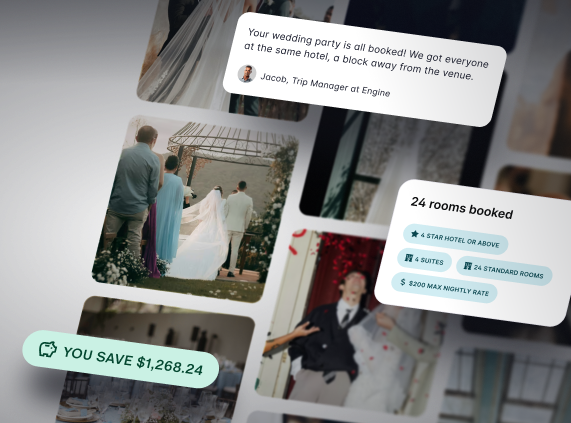
What does a typical room block hotel proposal include?

When you request wedding hotel room blocks, a typical hotel proposal usually includes the room rates, room types, taxes and fees, booking deadline, cancellation terms, parking details, and any perks or concessions. In many cases, it will also outline whether the block is contracted or courtesy, how many rooms are being held, and whether there are any minimum commitments.
That is the direct answer, but here is the part that matters most when you are planning a wedding: not every proposal is easy to understand at first glance. Two hotels can look similar on price, but one may include better terms, fewer risks, or more guest-friendly perks. That is why comparing proposals carefully can save you stress, money, and awkward surprises later.
Room Blocks by Engine helps couples organize and compare these details in one place, which makes a confusing part of wedding planning feel much more manageable.

Why wedding room block proposals can feel overwhelming
If you are already juggling your venue, guest list, RSVP deadlines, transportation, and welcome weekend plans, hotel proposals can quickly become one more thing on a very full plate.
And unlike choosing flowers or tasting cake, hotel room blocks often come with terms couples have never dealt with before. Words like cutoff date, attrition, courtesy block, and contracted block can make a simple decision feel far more complicated than it should.
The good news is that once you know what to look for, a proposal becomes much easier to read and compare.
What is usually included in a room block hotel proposal?
A strong hotel proposal should give you a clear picture of both the price and the commitment. Here are the main elements you can expect.
Room rates by room type
Most proposals break out pricing by room category, such as:
- Standard king
- Standard double queen
- Studio suite
- One bedroom suite
This helps you understand what your guests are likely to pay and whether the hotel offers options for couples, families, or wedding party members. If you are comparing brands like Marriott, Hilton, Hyatt, Hampton Inn, or Embassy Suites, pay close attention to whether the rate difference also comes with meaningful upgrades in space or amenities.
Estimated taxes and fees
This is one of the biggest things couples miss.
The quoted nightly rate is often not the full amount your guests will pay. A proposal may also include:
- Hotel taxes
- Resort or destination fees
- Service charges
- Parking fees
- Welcome bag handling fees
A room at one hotel may look cheaper upfront, but once those extras are included, another option may actually be the better value.
Number of rooms held
The proposal should show how many rooms the hotel is willing to set aside for your wedding guests. Some hotels may offer a smaller initial block with the option to add rooms later if demand grows.
This matters because many couples do not know exactly how many guests will book. Starting with a realistic number is often smarter than overcommitting too early.
Cutoff date
The cutoff date is the deadline for guests to reserve rooms within your block. After that date, unused rooms typically return to the hotel’s general inventory.
This is one of the most important dates in the proposal because late-booking guests may lose access to both the room block and the negotiated rate if they wait too long. Room Blocks by Engine highlights these details so couples can compare with confidence and share booking instructions clearly with guests.
Contract type: courtesy or contracted
A proposal should make clear whether the hotel is offering a courtesy block or a contracted block.
Courtesy block
A courtesy block usually does not require a financial commitment. The hotel sets aside rooms until the cutoff date, and any unbooked rooms are released without penalty.
This option is often appealing for weddings because it gives couples flexibility and lower risk.
Contracted block
A contracted block is a more formal agreement. It may offer better rates or better perks, but it can also include a minimum number of rooms that must be filled. If you do not meet that minimum, you may owe money for the unused rooms.
That is why the lowest rate is not always the best proposal.
Cancellation and modification terms
Every couple hopes plans stay simple, but weddings change. Guest counts shift. Travel plans move. Sometimes you need to adjust the number of rooms or ask about adding extra nights.
A proposal may include:
- Deposit requirements
- Cancellation deadlines
- Penalties for reducing rooms
- Terms for adding rooms later
- Policies for extending guest stays
These details are especially important if your wedding date falls during a busy season or holiday weekend.
Perks and concessions
This is where proposals can really differ.
Some hotels include added value such as:
- Complimentary suite upgrade for the couple
- Discounted suite rates for the wedding party
- Free parking
- Complimentary breakfast
- Welcome bag table or waived delivery fee
- Flexible booking link setup
- Meeting space for brunch or guest gathering
These perks can make your wedding weekend feel smoother and more special, so they should absolutely be part of your comparison.
Why using Room Blocks by Engine makes this easier
Couples often think the hardest part is finding a hotel. In reality, the harder part is comparing proposals, understanding the terms, and keeping everything organized.
Room Blocks by Engine was built to reduce that stress. It helps couples search hotels near their venue, send requests directly to selected properties, and compare rates, perks, and savings in one place. It also helps couples avoid the back and forth of emailing or calling hotels one by one.
Choose the proposal that feels clear, flexible, and guest-friendly
The best hotel room block proposal is not always the one with the absolute lowest rate. It is the one that gives you clear pricing, manageable terms, helpful perks, and confidence that your guests will have a comfortable place to stay.
That peace of mind matters. Your wedding weekend already has enough moving parts.
Ready to find your perfect room block without the stress? Start comparing hotels with Room Blocks by Engine today. Start comparing here by first choosing the city where you will do your wedding and then reviewing proposals side by side with confidence.



.svg)
BOOKING GROUP TRAVEL WILL NEVER BE THE SAME.