What happens if fewer guests book than expected during the room block reservation?

If your guest count doesn't quite match your room block, don’t panic, the fallout really just depends on the 'flavor' of your contract. A courtesy block lets those extra rooms go back to the hotel with a simple 'no hard feelings' shrug, but a contracted block is a bit more of a commitment. If you don't hit your minimum numbers there, you could be on the hook for the difference, which is exactly why we're so obsessed with reading the fine print before you sign.
For many couples, this is one of the most stressful parts of arranging guest accommodations. You are trying to be thoughtful, organized, and budget conscious, but it can be hard to predict exactly how many guests will need a hotel. Some may book late, some may stay elsewhere, and some may decide not to travel at all.
The good news is that this situation is common, manageable, and often avoidable with the right planning. When you know how room blocks work and choose the right setup for your wedding, you can protect your budget, keep things simple for guests, and avoid last minute surprises.
Understanding what really happens when your block underbooks
Courtesy blocks are usually the lower risk option
A courtesy block is often the most flexible choice for weddings. The hotel sets aside a small group of rooms for your guests, but if they do not all get booked by the cutoff date, the remaining rooms return to the hotel’s general inventory. In most cases, you do not owe money for those unused rooms.
This is why many engaged couples prefer courtesy blocks when they’re not so sure of how many out of town guests will attend. They offer peace of mind and reduce the pressure of trying to predict exact numbers too early.
Contracted blocks can come with financial responsibility
A contracted block is different. It usually comes with stronger rate protection and better perks, but it may also include an attrition clause, which means you agree that a certain percentage of rooms will be booked. If your guests book fewer rooms than required, you could owe the hotel for the shortfall.
For example, if you commit to 20 rooms and the contract requires 80 percent pickup, you may be responsible for 16 booked rooms. If only 12 are booked, the hotel may charge you based on the difference.
This does not mean contracted blocks are bad. They can be a great option for larger weddings or high demand weekends. It just means you need to go in with clear expectations.
Why couples often overestimate how many rooms they need
It is very normal to overestimate your wedding room block. Couples often assume that:
- Every out of town guest will stay at the hotel
- Couples will book separate rooms instead of sharing
- Guests will book early
- Everyone will want to stay in the main hotel block
In reality, some guests stay with family, use loyalty points at another hotel, share rooms, or decide to commute. Others wait until the last minute and miss the cutoff date.
This is especially common when couples are comparing familiar brands like Marriott, Hilton, Hyatt, Embassy Suites, Hampton Inn, or Holiday Inn. Guests may have personal preferences, rewards, memberships, or price limits that influence where they book.
How to avoid paying for unused rooms
Start with a realistic estimate
Instead of basing your block on your full guest list, focus on the guests most likely to need a hotel. Ask yourself:
- How many guests are traveling from out of town?
- How many local guests are unlikely to stay overnight?
- How many households, not individual guests, may need rooms?
- Are there family members or wedding party members who already told you they will stay at the hotel?
A conservative estimate is usually safer than an overly ambitious one.
Consider booking in stages
Many hotels are more open to adding rooms later than reducing them after a contract is signed. Starting with a smaller block and increasing it if demand is strong can help you avoid overcommitting. This is often one of the smartest ways to manage uncertainty.
Watch the cutoff date carefully
The cutoff date is the deadline for guests to reserve rooms within your block. After that, unused rooms are released, and the group rate may no longer be available.
Build reminders into your wedding communication plan so guests know when to book. A quick note on your wedding website, in your invitations, and in a follow up email can make a big difference.
Read the contract before you sign
This is where many hidden issues show up. Review:
- Minimum room commitment
- Attrition percentage
- Cutoff date
- Deposit requirements
- Cancellation terms
- Whether the hotel allows reductions before a certain deadline
- Extra fees such as parking, resort fees, or welcome bag handling fees
The more clearly you understand the terms, the easier it is to choose the right hotel and block type.
What to do if bookings are coming in lower than expected
If your room block is not filling as expected, try these steps:
- Review your RSVP list
Compare confirmed guests with expected hotel demand. You may find that your original estimate was simply too high. - Send a clear guest reminder
Share the booking link again and include the cutoff date in plain language. - Ask the hotel about flexibility
Some hotels may allow small adjustments before a certain deadline, especially if you ask early. - Check for another block type
In some cases, a courtesy block or smaller adjusted block may be a better fit. - Get support before agreeing to changes
This is where expert guidance matters. It is much easier to avoid stress when someone helps you compare proposals, explain terms, and flag risk before you commit.
How Room Blocks by Engine makes this easier
Wedding hotel planning sounds simple until you are the one comparing rates, reading contract language, checking perks, and trying to predict guest behavior. That is exactly why support matters.
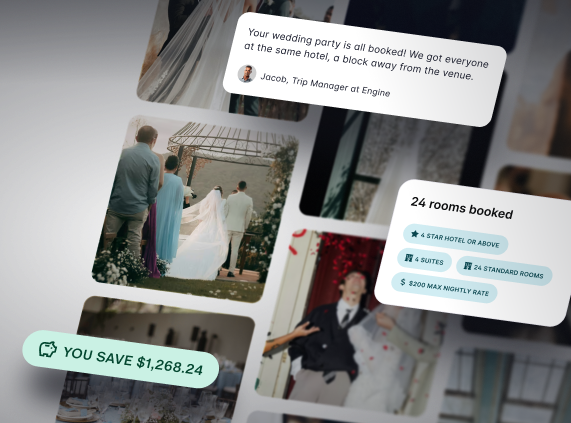
Room Blocks by Engine helps couples search hotels near their venue, compare proposals side by side, and understand important details like rates, perks, savings, and booking terms all in one place. It also helps simplify communication with hotels so couples do not have to spend hours emailing and calling on their own.
That kind of clarity matters when you are deciding between a flexible courtesy block and a contracted option with stronger protections but more responsibility. It also matters when you are trying to secure a good rate, avoid hidden fees, and make sure your guests have convenient options for the wedding weekend.
A calmer way to manage your wedding room block
If fewer guests book than expected, you are not automatically in trouble. The outcome depends on whether you chose a courtesy block or a contracted block, what your agreement says, and how early you catch the issue. Most importantly, this is a problem you can often prevent with realistic estimates, careful timing, and the right support.
Planning a wedding already comes with enough moving parts. Your hotel room block should make life easier, not harder. Ready to find your perfect room block without the stress? Start comparing hotels with Room Blocks by Engine today. Start comparing here by first choosing the city where you will do your wedding and finding guest friendly hotel options that fit your plans.




.svg)
BOOKING GROUP TRAVEL WILL NEVER BE THE SAME.