What if hotels don’t have availability for our dates during the room blocks reservation?

Yes, you still have options if hotels do not have availability for your wedding dates during the room block reservation process. In most cases, the best next step is to expand your hotel list, adjust your block strategy, or look at nearby areas before guest rooms become even harder to secure.
It’s totally normal to feel a bit of a sting when you realize your first choice is off the table, especially when you’ve already got a million other wedding boxes to tick. But hitting a 'no vacancy' doesn't mean your guests are stranded. It’s just your cue to pivot to a faster, smarter plan that keeps the logistics from taking over your life
For couples planning a wedding, hotel availability can tighten quickly around popular weekends, peak seasons, major local events, and destinations with limited inventory. That is why it helps to start early, compare multiple properties, and stay flexible on room block structure. With the right approach, you can still secure convenient options for your guests without turning this into another full time planning task.
Why hotels may not have rooms for your dates
It’s not you, it’s me the hotel! There are usually a handful of usual suspects when a hotel declines a room block request, and understanding them is the first step to finding your workaround.
Your wedding falls on a high demand weekend
Hotels often fill up quickly during holiday weekends, college football weekends, festivals, conventions, and peak wedding season. If your wedding is at a popular destination or in a downtown area, availability can disappear earlier than expected.
You are booking later in the planning process
Many couples start thinking about guest accommodations after the venue is booked and invitations are underway. By then, the best room types, best rates, or most convenient hotels may already be gone.
The hotel has limited group inventory
Even well known chains like Marriott, Hilton, Hyatt, Holiday Inn, and Embassy Suites may limit how many rooms they are willing to hold for a wedding block. A hotel might still have a few rooms left for individual travelers, but not enough to offer a proper group block.
What to do if hotels are unavailable
When a hotel says it cannot accommodate your dates, do not panic. Focus on the next best solution.
Expand your search radius
Guests do not always need to stay right next to the venue. Looking 10 to 20 minutes away can open up better availability, better rates, and more room types. This is especially helpful if your venue is in a resort town, downtown core, or small town with limited hotel supply.
Request proposals from more than one hotel
Instead of relying on a single property, try to compare several. A mix of price points helps guests choose what works for them, and it protects you if one hotel fills up or cannot extend more rooms later.
A common strategy is to include:
- One primary hotel close to the venue
- One more budget friendly option nearby
- One backup hotel in a neighboring area
Consider a smaller starting block
If availability is tight, starting with a realistic number of rooms can be smarter than pushing for too many. Hotels are often more willing to add rooms later if demand is strong than to reduce a block that was too large from the start.
Ask about courtesy blocks first
If you are unsure how many guests will book, a courtesy block may be the easiest place to start. It gives guests access to reserved rooms without the same level of financial commitment that often comes with a contracted block.
How to protect your guests from last minute lodging stress
Your guests are expecting clear, simple lodging guidance for the wedding weekend. Even if your first-choice hotel is unavailable, you can still make the experience feel organized.
Share booking details early
As soon as you have one or two strong hotel options, send them to guests through your wedding website, save the dates, or invitation details page. The earlier guests see the information, the better chance they have of booking before rooms disappear.
Give guests more than one option
Not every guest has the same budget or travel style. Some may want a full service hotel, while others prefer a simpler stay. Providing choices makes your wedding feel thoughtful and reduces the number of accommodation questions coming your way.
Track demand as RSVPs come in
Your RSVP count can help you estimate whether you need to request more rooms. If a large portion of guests are traveling in from out of town, you may need to revisit your block quickly.
How to avoid hidden fees and booking surprises
When availability is limited, couples sometimes rush into the first option they see. That can create problems later.
Review the cutoff date
The cutoff date is the deadline for guests to book inside your block. After that, unused rooms may be released back to the hotel.
Understand whether your block is contracted or courtesy
This matters. A lot. Contracted blocks may come with stronger rates or perks, but they can also include minimum commitments. Courtesy blocks usually offer more flexibility.
Ask about extra costs
Before confirming, check for:
- Resort or destination fees
- Parking charges
- Welcome bag handling fees
- Minimum stay requirements
- Deposit terms
- Cancellation rules
These details can affect the true value of the block, even if the nightly rate looks attractive at first.
Why comparing hotels matters more when availability is tight
When your dates are competitive, comparing hotel options becomes even more important. It is not just about finding any available room. It is about finding the best fit for your guests, your budget, and your wedding weekend logistics.
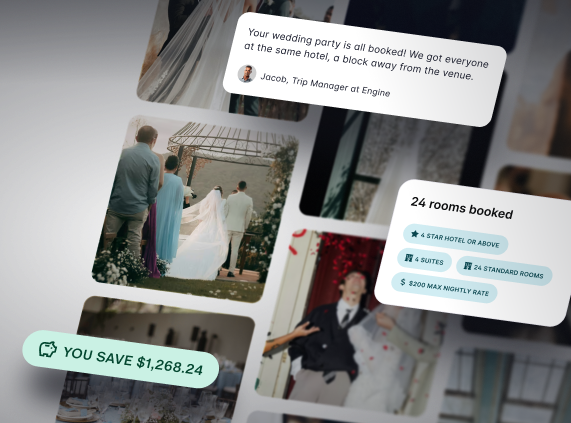
That is where the process can get overwhelming. Calling hotels one by one, waiting for responses, comparing terms, and trying to understand rates and policies can eat up hours you do not have. Room Blocks by Engine simplifies that process by helping couples compare hotel proposals in one place, understand their options more clearly, and move faster when timing matters.
The easiest way to move forward if your first hotel says no
A hotel saying no to your dates is frustrating, but it is not the end of the road. It usually just means you need more flexibility, more options, and a more organized way to compare what is actually available.
The best next move is to search multiple hotels, stay realistic about room counts, and give your guests clear choices early. That keeps your wedding weekend plans moving and helps everyone feel taken care of.
Find the right room block with less stress
If hotels do not have availability for your dates, the answer is not to panic. The answer is to widen your search, compare smarter, and book earlier where possible. Wedding room blocks can absolutely still work out, even when your first choice is unavailable.
Ready to find your perfect room block without the stress? Start comparing hotels with Room Blocks by Engine today. Start comparing here by first choosing the city where you will host your wedding and exploring the hotel options that fit your guests best.




.svg)
BOOKING GROUP TRAVEL WILL NEVER BE THE SAME.