What percentage of out-of-town guests typically book a room block?

There is no universal percentage of out-of-town wedding guests who will book into your room block. Some guests will absolutely want the convenience of staying with the group, while others may choose a vacation rental, stay with family, use loyalty points at another hotel, or make the trip in one day if they live close enough.
That is why the smartest approach is not chasing a “perfect” percentage. It is building a realistic estimate based on your guest list, wedding location, and budget expectations, then choosing a room block strategy that gives you flexibility.
For most couples, this is where the stress starts. You are trying to predict guest behavior, compare hotel brands, understand contract terms, and avoid paying for rooms you do not need. The good news is that it does not have to be complicated. With the right approach, and the right support, booking wedding hotel blocks can feel organized, clear, and manageable.

Why there is no standard percentage for every wedding
The number of out-of-town guests who book your room block depends on several practical factors.
How far guests are traveling
Guests flying in are more likely to book a hotel than guests driving in from a nearby city. If many of your guests are local or within easy driving distance, fewer may need overnight accommodations.
Whether your wedding is a destination event
Destination weddings and full wedding weekends often lead to stronger room block usage because guests expect to stay close to the celebration. If your wedding includes a welcome party, rehearsal dinner, after-party, or brunch, staying at the host hotel becomes even more appealing.
Your guests’ budgets and preferences
Some guests want the convenience of a group hotel, especially at recognizable brands like Marriott, Hilton, Hyatt, Westin, Sheraton, or Hampton Inn. Others will shop around for lower rates, use points, or split a rental home with family. Even if your hotel is beautiful and well located, not every out-of-town guest will choose it.
The lodging options near your venue
If your venue is in a city with lots of hotels, guests will have more choices. If it is in a smaller town, or near only a few reliable options, your room block may capture more of the out-of-town demand.
A better question to ask: how should you estimate your room block?
Instead of asking what percentage is typical, ask:
How many guests realistically need a hotel, and how many of those guests are likely to want the convenience of booking with the wedding group?
That usually gives you a much more useful starting point.
Start with households, not individual guests
Couples often overestimate by thinking in total guest count. Hotel rooms are usually booked by households or couples, not by individual people. A wedding with 80 out-of-town guests does not automatically mean 80 hotel rooms.
Separate “likely hotel guests” from “possible hotel guests”
Make a quick planning list and group your out-of-town invitees into categories:
- Guests who will almost certainly need a hotel
- Guests who might stay with family or friends
- Guests who may book elsewhere for price or loyalty reasons
- Guests who may not attend at all
This simple step makes your estimate much more grounded and can help you avoid overcommitting.
Build in flexibility
Many couples are better served by starting with a smaller, safer room block and adding more rooms later if pickup is strong. That is often much less stressful than contracting too many rooms too early.
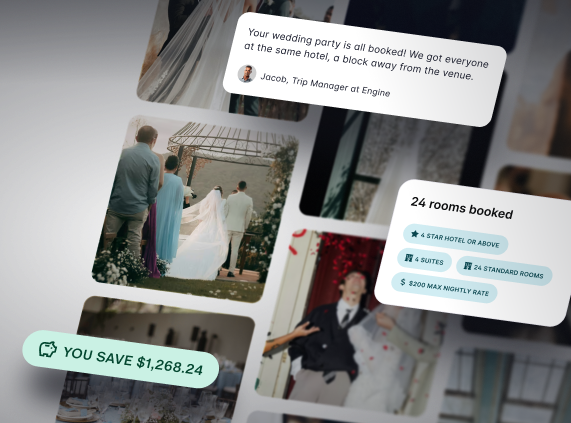
Room Blocks by Engine helps couples compare hotel proposals, rates, perks, and key terms in one place, which makes this decision process much easier to manage.
How to avoid booking too many rooms
One of the biggest wedding room block mistakes is assuming every out-of-town guest will book within the block. In reality, some will not, even if they fully intend to attend your wedding.
Here are a few ways to protect yourself:
Choose the right type of block
A courtesy block is usually the lower-risk option because it does not require a financial commitment for unsold rooms. A contracted block can come with better rates or perks, but it may also include minimums, deposits, or attrition terms.
If you are feeling unsure about your guest pickup, flexibility matters.
Understand attrition before you sign
Attrition is the portion of your contracted rooms that you are expected to fill. If your contract includes attrition, ask exactly what happens if your guests book fewer rooms than expected. This is one of the most important details to review before committing.
Watch for hidden costs
Before confirming any block, review:
- Resort or destination fees
- Parking charges
- Welcome bag handling fees
- Minimum stay requirements
- Early departure fees
- Deposit and cancellation terms
- Whether taxes are included in the quoted rate
These details can affect both your budget and your guests’ experience.
Tips for getting the best room block rate
A good room block is not just about price. It is about value, convenience, and clear terms.
Compare multiple hotels
Most couples do best when they compare a few options, not just one. Looking at different hotel brands and price points gives your guests more flexibility and helps you see which offer is truly strongest.
Ask about perks, not just discounts
Sometimes the best value comes from concessions like:
- A suite upgrade for the couple
- Complimentary breakfast
- Reduced parking
- Welcome bag setup
- Late checkout
- Flexible cutoff dates
Choose hotels that match your guest mix
If your guest list includes a mix of budgets and travel styles, you may want one full-service hotel and one more affordable option. For example, a Hyatt Regency or Marriott for guests who want more amenities, plus a Hampton Inn or Holiday Inn Express for guests who want a simpler stay.
How to manage RSVPs and room block pickup without the chaos
You do not need to guess everything on day one. Room blocks can be managed more smoothly when you stay organized.
Share booking details early
Once your block is confirmed, add the booking link or instructions to your wedding website right away. Guests appreciate having a clear place to book, and you will get a better sense of demand earlier.
Remind guests before the cutoff date
Many guests wait longer than couples expect. A gentle reminder in your wedding email, website update, or RSVP communication can make a big difference.
Keep expectations realistic
Even guests who are excited to celebrate with you may not book inside the block. That does not mean anything went wrong. It just means guests make travel decisions in different ways.
Room Blocks by Engine is designed to reduce the back-and-forth by helping couples search hotels near their venue, receive proposals, compare terms side by side, and move toward confirmation with support along the way.
Make your wedding room block feel easy, not overwhelming
If you are wondering what percentage of out-of-town guests typically book a room block, the most honest answer is this: it depends on your wedding.
What matters more than finding a universal percentage is creating a smart estimate, choosing flexible terms, and giving your guests convenient options at trusted hotels. When you do that, your room block becomes a helpful part of the wedding experience instead of one more stressful task on your list.
And if comparing hotels, reviewing proposals, and sorting through contract language already sounds exhausting, that is exactly why couples use Room Blocks by Engine. It is a free platform that helps simplify hotel room block planning and takes the confusion out of rates, perks, and next steps.
Ready to find your perfect room block without the stress? Start comparing hotels with Room Blocks by Engine today. Start by choosing the city where you are getting married, compare your hotel options, and make this part of wedding planning feel a whole lot easier.




.svg)
BOOKING GROUP TRAVEL WILL NEVER BE THE SAME.