What should we review before signing a wedding room block contract?

When you are about to sign a wedding room block contract, review the room count, the cutoff date, cancellation terms, attrition, deposits, hidden fees, and any promised perks in writing.
Those are the details most likely to affect your budget, your guests' experience, and your stress level later. Room Blocks by Engine is designed to make this step easier by helping couples compare hotel proposals, understand contract language, and move forward with more confidence.
Booking hotel room blocks can feel like one more complicated item on an already full wedding checklist. Between coordinating guest travel, comparing hotels, and trying to avoid expensive surprises, it is easy to feel overwhelmed. The good news is that a little contract review upfront can save you time, money, and last minute panic.
Why your wedding room block contract matters
A wedding room block contract is more than a reservation. It is the agreement that sets the rules for how many rooms are held, how long guests can book them, what rate they receive, and what happens if plans change.
This matters whether you are considering a block at Marriott, Hilton, Hyatt, Hampton Inn, Embassy Suites, DoubleTree, or another hotel brand. Every property may handle group bookings a little differently, especially for weddings. Some offer flexible courtesy blocks, while others offer contracted blocks with stronger rate protection but more responsibility.
Before you sign, make sure you understand exactly what you are agreeing to.
The most important things to review before signing
1. The type of room block
First, confirm whether you are signing a contracted room block or a courtesy block.
A contracted block usually offers stronger price protection and better perks, but it may require you to meet a minimum number of booked rooms. A courtesy block is more flexible and often has no financial commitment, but the number of rooms may be smaller and availability may not be guaranteed for long.
If you are not sure which is better for your wedding, think about your guest count, travel needs, and how many people are truly likely to stay at the hotel.
2. Your room count and pickup expectation
One of the biggest mistakes couples make is blocking too many rooms too early. Room count should be based on realistic guest behavior, not best case assumptions. Room Blocks by Engine specifically highlights that starting too late or contracting too many rooms can create unnecessary risk for couples.
Review:
- How many rooms are being held
- How many room nights are expected
- Whether you can add rooms later
- Whether you can reduce the block if bookings are lower than expected
It is often safer to start with a smaller block and grow it if demand increases.
3. Attrition terms
Attrition is one of the most important contract terms to understand. It refers to the percentage of rooms you are expected to fill in a contracted block. For example, if the agreement requires 80 percent pickup, you may still owe money if too few guests book.
Review these questions carefully:
- What percentage of the block must be filled?
- What happens if your guests book fewer rooms?
- Is the penalty based on lost revenue, total room nights, or another formula?
- Is there a date by which the block can be adjusted downward?
If the attrition section feels confusing, that is a sign to pause and get support before signing.
4. The cutoff date
The cutoff date is the deadline for guests to reserve rooms within the block. After that, unused rooms usually return to the hotel's general inventory.
Make sure you know:
- The exact cutoff date
- Whether the hotel can extend it if rooms are still available
- Whether the group rate can still apply after the cutoff date
- How you should communicate the deadline to guests
This date matters because wedding guests often book later than couples expect.
5. Room rates, taxes, and extra fees
A great sounding room rate is not always the full picture. Before signing, confirm what guests will actually pay.
Review:
- Nightly group rate
- Taxes
- Resort or destination fees
- Parking charges
- Breakfast inclusion
- Welcome bag handling fees
- Early check in or late checkout costs
Many hotel proposals also include perks or concessions, such as upgrades, complimentary breakfast, or waived welcome bag fees. Those details should be listed clearly, not promised casually in an email or phone call. Room Blocks by Engine helps couples compare rates, perks, savings, and guest logistics side by side so these details are easier to spot before committing.
Questions to ask before you sign
Can guests book extra nights at the same rate?
Many wedding guests want to arrive early or stay later, especially for destination weddings or full wedding weekends. Confirm whether the group rate applies to extra nights, subject to availability.
Can suites or special room types be included?
If you need suites for the wedding party, family, or the couple, ask whether those room types are part of the agreement and how long they can be held.
What is the cancellation policy?
Cancellation language can vary widely. Some hotels allow cancellation before a certain date with no penalty. Others may require payment based on the contracted commitment. This is one of the first things to review if you want to protect your budget.
Who manages guest reservations?
Most wedding blocks use an online booking link, which makes things much easier for guests and for you. Confirm whether the hotel will provide a booking link and who handles guest questions after the block is live.
How Room Blocks by Engine makes contract signing easier
The hardest part of signing a wedding room block contract is often not the hotel itself. It is the back and forth, the comparison work, and the uncertainty around what contract terms actually mean.
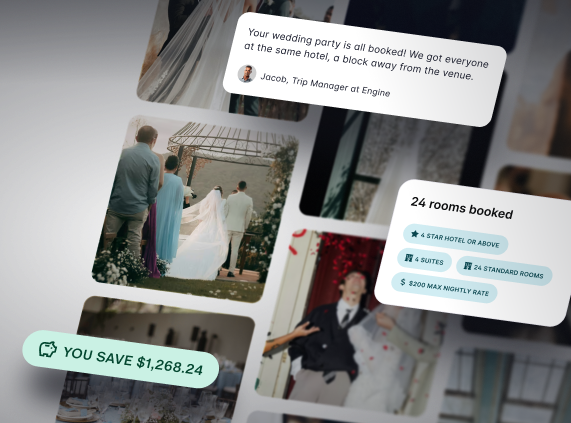
Room Blocks by Engine helps simplify that process by allowing couples to search hotels near their venue, receive proposals, compare rates and perks in one place, and get support through the final contracting step. The brand's wedding content is built around reducing stress and helping couples plan smarter, which is exactly what matters during this stage.
That means fewer spreadsheets, fewer confusing emails, and more confidence that you are choosing a block that works for both your budget and your guests.
Sign with clarity, not stress
Before signing a wedding room block contract, make sure you understand the room count, the pickup expectations, the cutoff date, the cancellation policy, and every fee or perk attached to the agreement. Those details shape your guests' experience and help you avoid expensive surprises.
A room block should make your wedding weekend feel more organized, not more stressful. Ready to find your perfect room block without the stress? Start comparing hotels with Room Blocks by Engine today. Start comparing here by first choosing the city where you'll host your wedding and narrowing down the hotels that fit your guests best.




.svg)
BOOKING GROUP TRAVEL WILL NEVER BE THE SAME.