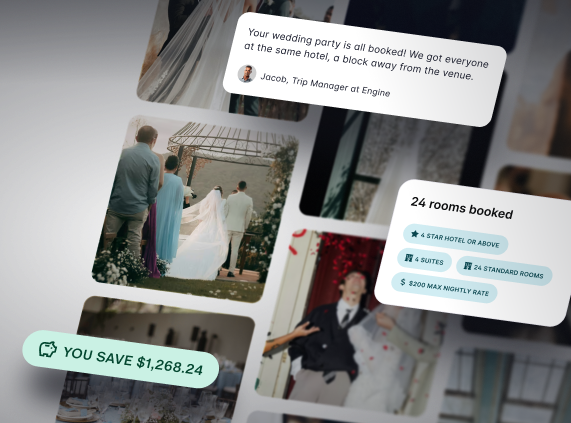
Why do some hotels decline wedding block requests?

Getting a 'thanks, but no thanks' from a hotel usually comes down to a few simple (but frustrating) reasons. Maybe your date is a local 'superstar' weekend, or your room count doesn't quite mesh with their floor plan. Sometimes, it’s just a matter of timing, reaching out too early or too late can leave a hotel hesitant to commit. Understanding these little quirks is the secret to building a block that hotels are actually excited to host!
"Don't let a 'no' dim your wedding glow! The perfect fit is still out there waiting for you."It usually means the hotel is protecting its inventory, pricing, or staffing. With the right timing, realistic expectations, and a simpler way to compare proposals, couples can still secure a great wedding room block without turning it into another stressful planning task.
Planning guest accommodations is one of those weddings that sounds simple at first, then quickly becomes complicated. Between comparing hotels, sorting through room types, asking about perks, and trying to avoid hidden fees, it can feel like a full time project. That is exactly why many couples look for support from a platform like Room Blocks by Engine, which helps organize quote requests, hotel responses, and contract details in one place.
Why hotels say no to wedding room blocks
Sometimes it may feel like this, but hotels do not decline wedding room blocks at random. Most of the time, there is a clear business reason behind it.
The hotel expects high demand on your dates
If your wedding falls on a holiday weekend, during peak travel season, or at the same time as a major local event, hotels may not want to hold rooms at a group rate. They may expect to fill those same rooms through regular bookings at a higher price.
This is especially common at well known brands and popular properties such as Marriott, Hilton, Hyatt, Sheraton, Westin, Hampton Inn, and Holiday Inn locations near downtown districts, beach areas, or busy wedding venues.
The room count feels too high or too low
Hotels look closely at the number of rooms you are requesting. If the block is too large for the property, they may worry about overcommitting. If it is too small, they may not feel it is worth setting up a group agreement.
That is why estimating demand matters. Couples often overestimate how many guests will actually book at the hotel, especially when many local guests will drive home or stay with family.
The request comes too early
Many couples assume booking earlier is always better. In reality, some hotels will not quote wedding blocks more than 9 to 12 months out because they do not yet have pricing or inventory ready. Room Blocks by Engine notes that this is the window when most couples begin the process and when hotels are more likely to provide useful quotes.
The request comes too late
On the other hand, waiting too long can also lead to declines. If you start just a few months before the wedding, the hotel may already be close to full or have limited room types left. Even if a hotel responds, your rates and options may be less flexible.
The hotel is unsure about your group’s pickup
Hotels want confidence that the rooms they hold will actually be booked. If they think the group may not fill the block, they may decline or only offer stricter terms. This is especially true for contracted blocks, where the hotel sets aside a guaranteed number of rooms in exchange for a commitment from the couple.
Your request is missing key details
Hotels respond faster and more confidently when they have the basics:
- Wedding date
- Venue location
- Estimated number of rooms needed
- Check in and check out pattern
- Preferred hotel area
- Budget expectations
- Any must have amenities, like free parking or breakfast
When details are vague, hotels may choose not to respond or may decline because the request feels uncertain.
What couples can do to improve their chances
A declined request is frustrating, but it can also be useful feedback. It helps you adjust your plan before you commit to the wrong hotel.
Be realistic about how many rooms you need
A smart starting point is to think about who truly needs a hotel. Out of town guests, immediate family, and the wedding party are often your core room block audience. You can always ask about adding rooms later if the hotel still has inventory, which many properties prefer over reducing a block after the fact.
Consider more than one hotel
Many couples do best with 2 or 3 options across different price points. For example, one full service hotel near the venue, one more budget friendly option nearby, and one familiar select service brand for guests who prioritize value.
This helps guests choose what fits them best and reduces pressure on a single property to accommodate everyone.
Ask about courtesy blocks first
If you are unsure how many guests will book, a courtesy block may be a better fit than a contracted block. Courtesy blocks usually do not require a financial commitment, while contracted blocks often come with minimums, deposits, or attrition clauses.
That distinction matters. A hotel that declines a larger contracted request may still be willing to offer a smaller courtesy block.
How to avoid hidden fees and frustrating surprises
Even when a hotel says yes, couples should read the proposal carefully. A lower nightly rate is not always the better deal.
Watch for these common costs
- Parking fees
- Resort or destination fees
- Welcome bag handling fees
- Early departure fees
- Deposit requirements
- Attrition penalties on contracted blocks
- Short cutoff dates that release rooms too soon
These are the details that can make the process feel overwhelming when you are contacting hotels one by one. Room Blocks by Engine helps couples compare rates, perks, and terms side by side, which makes it easier to spot the real value in a proposal and avoid surprises later.
Why the process feels so difficult on your own
Hotel room blocks sit at the intersection of wedding planning and hotel sales. Couples are often trying to make quick decisions while learning unfamiliar terms, comparing multiple chains, and guessing what their guests will actually need.
That is why this step often creates more stress than expected. According to Room Blocks by Engine’s wedding FAQ, couples can search nearby hotels, send requests directly to selected properties, receive proposals, and compare rates and perks in one place instead of chasing down answers individually. The broader Room Blocks by Engine brand guidance also emphasizes helping couples through overwhelming planning tasks with clear, practical support.
Make your wedding room block easier from the start
The simplest path is to start early, ask for a realistic number of rooms, review fees carefully, and keep guest needs in mind. Most importantly, do not feel like you have to manage every email, follow up, and contract detail on your own.
Ready to find your perfect room block without the stress?
Start comparing hotels with Room Blocks by Engine today. Start comparing here by first choosing the city where you will do your wedding, then review your best hotel options with confidence.


.svg)
BOOKING GROUP TRAVEL WILL NEVER BE THE SAME.